Detailed slide-by-slide text content extracted from this presentation.
Slide 01
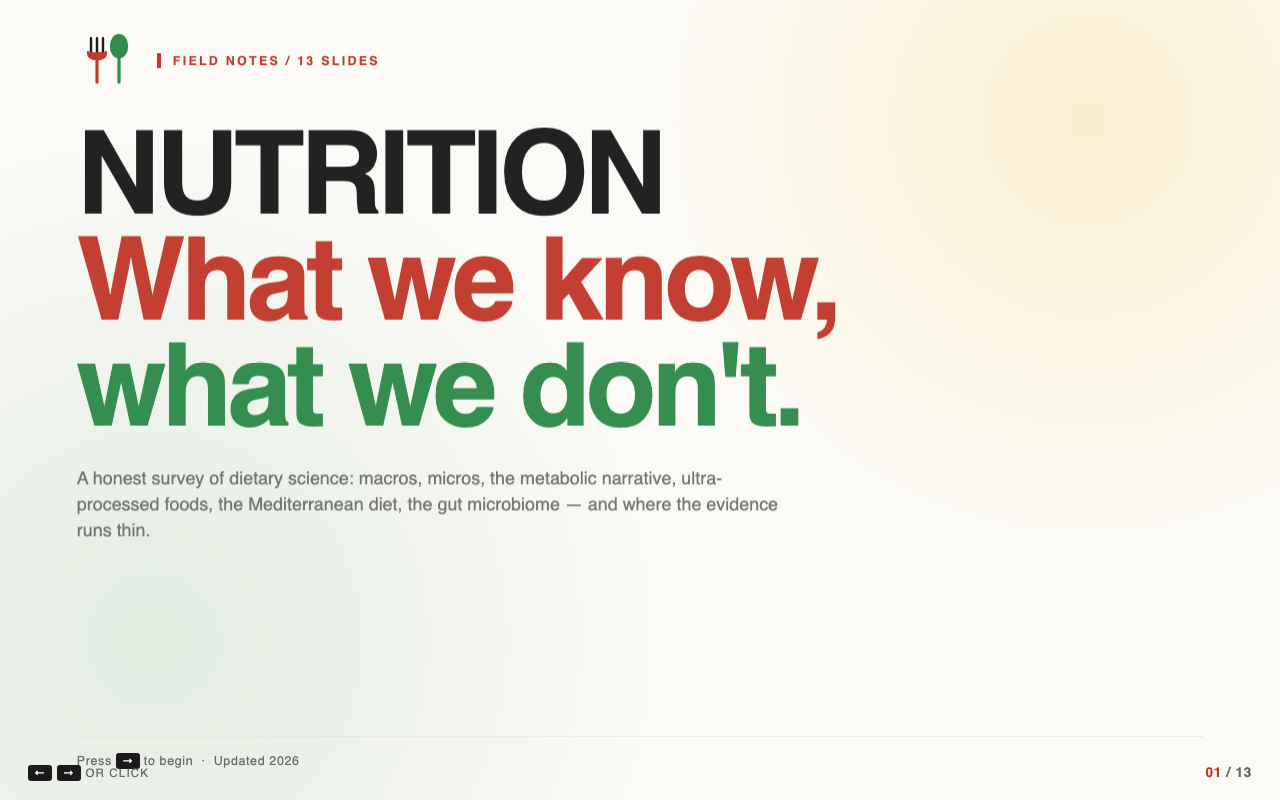
Nutrition Science
- Health • Nutrition
- From macronutrients to microbiome, from ancient dietary wisdom to modern metabolomics -- the science of how food sustains, heals, and transforms the human body.
- BiochemistryMetabolismPublic HealthDiet
Slide 02
What Is Nutrition Science?
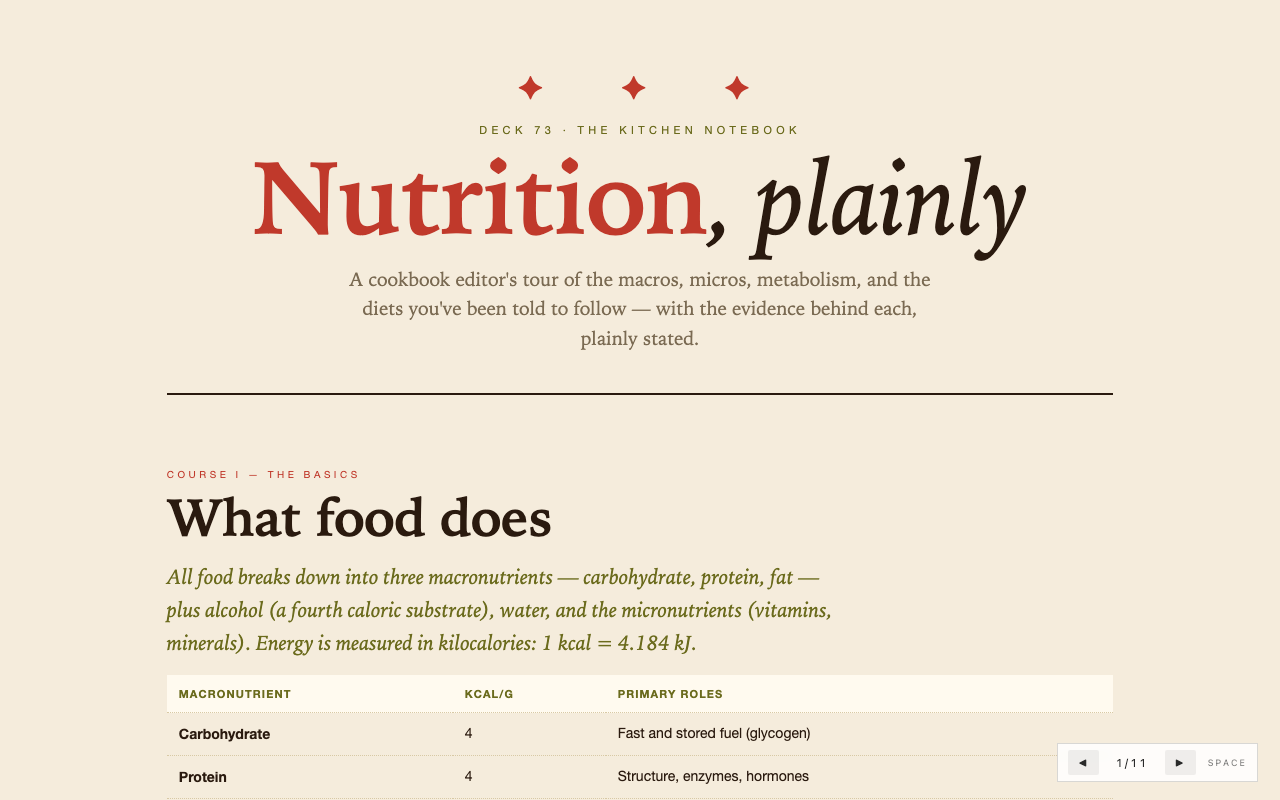
- Nutrition science studies how organisms obtain and utilize food substances for growth, maintenance, and repair. It spans biochemistry, physiology, epidemiology, and behavioral science.
- The field seeks to answer fundamental questions: What should we eat? How much? When? And how do individual differences in genetics, microbiome, and lifestyle modify these answers?
- "Let food be thy medicine and medicine be thy food."-- Attributed to Hippocrates, c. 400 BCE
- Core Disciplines
- Nutritional biochemistry
- Nutritional epidemiology
- Clinical nutrition
- Public health nutrition
- Nutrigenomics
- Food science and technology
- Behavioral nutrition
- Sports nutrition
Slide 03
Historical Milestones
- 1747
- James Lind conducts first clinical trial: proves citrus fruits cure scurvy on HMS Salisbury
- 1816
- Francois Magendie demonstrates dietary protein is essential for life in dogs
- 1912
- Casimir Funk coins "vitamine" (vital amine) -- discovers B1 prevents beriberi
- 1928
- Albert Szent-Gyorgyi isolates Vitamin C (ascorbic acid); Nobel Prize 1937
- 1941
- First Recommended Dietary Allowances (RDAs) published by US National Research Council
- 1958
- Ancel Keys launches Seven Countries Study linking saturated fat to heart disease
- 1977
- McGovern Committee issues first US Dietary Goals -- "eat less fat"
- 1992
- USDA Food Pyramid introduced (replaced 2011 by MyPlate)
- 2006
- Human Microbiome Project launched -- gut bacteria reshape nutrition understanding
- 2015
- PREDICT study begins: individual responses to food vary enormously regardless of diet type
Slide 04
Macronutrients: The Big Three
- Carbohydrates
- 4 kcal/gram
- Primary energy source for brain (120g/day)
- Simple (mono/disaccharides) vs. complex (polysaccharides)
- Fiber: 25-38g/day recommended; only 5% of Americans meet this
- Glycemic index/load affects blood sugar response
- Recommended: 45-65% of total calories
- Proteins
- 4 kcal/gram
- 20 amino acids; 9 essential (must come from diet)
- RDA: 0.8g/kg body weight (athletes: 1.2-2.0g/kg)
- Complete proteins: contain all 9 essential AAs (animal sources, soy, quinoa)
- Thermic effect: 20-30% of protein calories burned in digestion
- Recommended: 10-35% of total calories
- Fats
- 9 kcal/gram
- Essential fatty acids: omega-3 (ALA, EPA, DHA) and omega-6 (LA)
- Saturated, monounsaturated, polyunsaturated, trans
- Brain is 60% fat by dry weight
- Enables absorption of vitamins A, D, E, K
- Recommended: 20-35% of total calories
- "There are no good or bad nutrients -- only good or bad quantities, patterns, and contexts."-- David Katz, MD, founding director of Yale's Prevention Research Center
Slide 05
Vitamins: Essential Micronutrients
- Fat-Soluble Vitamins
- Vitamin A: Vision, immune function, cell growth. Deficiency: leading cause of preventable blindness (500,000 children/year). Sources: liver, sweet potato, carrots.
- Vitamin D: Calcium absorption, bone health, immune modulation. 1 billion people worldwide are deficient. Synthesized via sun exposure (UVB). Sources: fatty fish, fortified foods.
- Vitamin E: Antioxidant, protects cell membranes. Sources: nuts, seeds, vegetable oils. Deficiency rare in developed world.
- Vitamin K: Blood clotting (K1) and bone metabolism (K2). K2 directs calcium to bones, away from arteries. Sources: leafy greens (K1), fermented foods (K2).
- Water-Soluble Vitamins
- Vitamin C: Collagen synthesis, antioxidant, iron absorption. Humans lost ability to synthesize it ~60 million years ago (GULO gene mutation). RDA: 75-90mg. Sources: citrus, peppers, kiwi.
- B Vitamins (8 types): B1 (thiamine), B2 (riboflavin), B3 (niacin), B5, B6, B7 (biotin), B9 (folate), B12 (cobalamin). Energy metabolism, nervous system, DNA synthesis.
- B12: Only vitamin exclusively from animal sources (or fortification/supplements). Deficiency affects 20% of elderly and most vegans without supplementation. Causes megaloblastic anemia and neuropathy.
- "A vitamin is a substance that makes you ill if you don't eat it."-- Albert Szent-Gyorgyi, Nobel laureate (discoverer of Vitamin C)
Slide 06
Minerals and Trace Elements
- Major Minerals (needed >100mg/day)
- Calcium: 99% in bones/teeth. RDA: 1000-1200mg. Peak bone mass by age 30. Dairy, fortified plant milks, kale, sardines. Deficiency: osteoporosis (200M affected globally).
- Iron: Oxygen transport (hemoglobin), energy metabolism. Most common deficiency worldwide (2 billion people). Heme iron (meat) absorbed 15-35% vs. non-heme (plants) 2-20%. Vitamin C enhances absorption 3-6x.
- Magnesium: Cofactor in 300+ enzymatic reactions. 50% of Americans are deficient. Involved in sleep, muscle function, mood regulation. Sources: nuts, seeds, dark chocolate, leafy greens.
- Trace Minerals
- Zinc: Immune function, wound healing, taste/smell, gene expression. Deficiency affects 2 billion people, mostly in developing countries. Oysters have 10x RDA per serving.
- Selenium: Antioxidant defense (glutathione peroxidase), thyroid function. Brazil nuts: single nut provides daily needs. Soil depletion creating new deficiency patterns.
- Iodine: Thyroid hormone synthesis. Iodine deficiency is #1 preventable cause of intellectual disability. Salt iodization (since 1920s) eliminated goiter in many countries.
- Sodium: Essential for fluid balance, nerve function. Average intake: 3,400mg/day (vs. recommended
Slide 07
The Gut Microbiome Revolution
- The human gut contains 38 trillion bacteria (slightly more than human cells), weighing 1-2 kg. This "forgotten organ" fundamentally shapes nutrition, immunity, and even behavior.
- Key Discoveries
- Gut bacteria produce vitamins K, B12, biotin, and folate
- Short-chain fatty acids (butyrate, propionate, acetate) from fiber fermentation fuel colon cells
- Microbiome diversity correlates with metabolic health
- Identical meals produce different blood sugar responses in different people (Zeevi et al., Cell, 2015)
- Antibiotic use in childhood alters microbiome development; linked to obesity risk
- Feeding Your Microbiome
- Prebiotics: Non-digestible fibers that feed beneficial bacteria. Inulin (chicory, garlic), FOS (onions, bananas), resistant starch (cooled rice/potatoes). Target: 30+ different plant foods per week.
- Probiotics: Live beneficial bacteria. Yogurt, kefir, kimchi, sauerkraut, kombucha. Strain-specific effects (not all probiotics are equal).
- Postbiotics: Beneficial compounds produced by bacteria. Butyrate reduces inflammation, strengthens gut barrier. Emerging area of research and supplementation.
- "We are not so much a single organism as a walking ecosystem."-- Tim Spector, "The Diet Myth" (2015)
Slide 08
The Fat Debate: Decades of Confusion
- The Low-Fat Era (1977-2000s)
- Ancel Keys' Seven Countries Study (1958) and the McGovern Committee (1977) led to decades of "fat is bad" messaging. The food industry replaced fat with sugar in thousands of products.
- 1977: US Dietary Goals recommend reducing fat to 30% of calories
- Fat consumption dropped, but obesity doubled (1980-2000)
- Refined carbohydrate intake increased 30%
- The "Snackwell's effect" -- people ate more "low-fat" processed foods
- "The dietary advice given to hundreds of millions of people was based on the flimsiest evidence."-- Nina Teicholz, "The Big Fat Surprise" (2014)
- Current Understanding
- Saturated fat: Debate ongoing. 2020 Cochrane review: reducing saturated fat lowers cardiovascular events by 21%. But individual SFA types may differ in effects.
- Trans fats: Definitively harmful. WHO called for global elimination by 2023. Increases LDL, decreases HDL, promotes inflammation. US banned in 2018.
- Omega-3s: EPA/DHA reduce triglycerides, inflammation. 2019 REDUCE-IT trial: high-dose EPA reduced cardiovascular events by 25%. Most populations consume far below optimal.
- Mediterranean diet: Rich in olive oil (monounsaturated fat). PREDIMED trial (2013/2018): 30% reduction in cardiovascular events. Now considered strongest dietary evidence base.
Slide 09
Sugar: The New Villain?
- By the Numbers
- 17 tsp
- average daily added sugar intake in US (71g) vs. WHO recommendation of 6 tsp (25g)
- Hidden sugar: 74% of packaged foods contain added sugar. A single can of Coca-Cola contains 39g (nearly 10 teaspoons). Yogurt, bread, pasta sauce, and "health foods" are common culprits.
- Industry influence: In 1967, the Sugar Research Foundation paid Harvard scientists to blame fat instead of sugar for heart disease (revealed in 2016 JAMA Internal Medicine paper). Set nutrition policy back decades.
- Health Effects of Excess Sugar
- Metabolic syndrome: Drives insulin resistance, the underlying mechanism of type 2 diabetes (537 million adults affected globally)
- Liver disease: Fructose metabolized like alcohol in liver; NAFLD now affects 25% of global population
- Cardiovascular: Those consuming 25%+ calories from sugar have 2.75x cardiovascular mortality risk (JAMA, 2014)
- Neurological: High sugar diets impair hippocampal function and BDNF production; Type 2 diabetes doubles Alzheimer's risk
- Addiction-like properties: Activates same dopamine pathways as drugs of abuse in brain imaging studies
- "Sugar is the alcohol of the child."-- Robert Lustig, MD, UCSF, "Fat Chance" (2012)
Slide 10
Protein: How Much Do We Really Need?
- Requirements by Population
- Sedentary adults: 0.8g/kg/day (RDA -- minimum to prevent deficiency, not necessarily optimal). A 70kg person: 56g/day.
- Active adults/athletes: 1.2-2.0g/kg/day. Endurance athletes: 1.2-1.4g/kg. Strength athletes: 1.6-2.2g/kg. Leucine threshold: 2.5-3g per meal to maximize muscle protein synthesis.
- Older adults (65+): 1.0-1.2g/kg/day recommended due to anabolic resistance. Sarcopenia (age-related muscle loss) affects 10-16% of elderly. Higher protein intake preserves independence.
- Pregnancy/lactation: Additional 25g/day. Critical for fetal brain development. Deficiency linked to low birth weight and developmental delays.
- Protein Quality
- DIAAS (Digestible Indispensable Amino Acid Score): Replaced PDCAAS in 2013. Measures individual amino acid digestibility.
- Highest quality: Milk protein (1.18 DIAAS), eggs (1.13), chicken (1.08)
- Plant proteins: Generally lower (soy: 0.90, pea: 0.82, wheat: 0.40). Combining complementary sources works.
- Timing: Even distribution across meals (20-40g per meal) more effective than front/back loading
- Plant vs. Animal Protein
- 2020 BMJ meta-analysis: replacing 3% of calories from animal protein with plant protein associated with 5% lower all-cause mortality. But confounders: people eating more plants tend to have healthier overall lifestyles.
Slide 11
Dietary Patterns: What Works?
- Mediterranean Diet
- Strongest evidence base. Rich in olive oil, fish, vegetables, legumes, whole grains. Moderate wine. Low in red meat and processed foods.
- 30% reduction in cardiovascular events (PREDIMED)
- 25% lower type 2 diabetes risk
- Cognitive protection in aging
- DASH Diet
- Designed to lower blood pressure. Emphasizes fruits, vegetables, low-fat dairy, whole grains, lean protein. Limits sodium.
- Lowers BP 6-11 mmHg
- Reduces stroke risk 18%
- As effective as one medication
- Blue Zones Diet
- Common elements from world's longest-lived populations (Okinawa, Sardinia, Ikaria, Nicoya, Loma Linda).
- 95% plant-based
- Legumes daily (1/2 cup)
- Stop eating at 80% full
- Intermittent Fasting
- Time-restricted eating (16:8, 5:2). Evidence growing but mixed for weight loss vs. caloric restriction.
- Improves insulin sensitivity
- Activates autophagy (cellular cleanup)
- May not suit everyone equally
- Ketogenic Diet
- Very low carb (
- Effective for seizure control
- Short-term weight loss effective
- Long-term sustainability debated
- Whole Food Plant-Based
- Minimally processed plant foods. No animal products. Distinct from "vegan" (which may include processed foods).
- Reverses heart disease (Ornish, Esselstyn)
- Requires B12 supplementation
- Lowest environmental footprint
Slide 12
Nutrition and Chronic Disease
- Diet-Related Deaths
- 11M
- annual deaths attributable to poor diet (Global Burden of Disease, 2019) -- more than tobacco
- Top dietary risk factors: (1) High sodium (3M deaths), (2) Low whole grains (3M), (3) Low fruit (2M), (4) Low nuts/seeds (2M), (5) Low vegetables (1.8M)
- Key insight: It is not just what people are eating too much of (sugar, salt, processed food) but what they are not eating enough of (fiber, fruits, vegetables, legumes, nuts) that drives disease.
- Specific Conditions
- Type 2 Diabetes: 90% preventable through diet/lifestyle. Losing just 5-7% body weight reduces risk 58% (DPP trial, 2002)
- Cardiovascular disease: Mediterranean diet reduces events by 30%. Each serving of processed meat daily increases risk 42%
- Cancer: 30-50% of cancers are diet-related. Processed meat classified as Group 1 carcinogen by IARC (2015). Fiber reduces colorectal cancer 10% per 10g/day
- Alzheimer's: MIND diet (Mediterranean-DASH hybrid) reduces risk 53% with strict adherence. Omega-3, berries, leafy greens emphasized
- "The doctor of the future will no longer treat the human frame with drugs, but rather will cure and prevent disease with nutrition."-- Thomas Edison, 1903
Slide 13
Ultra-Processed Foods (UPFs)
- The NOVA classification system (Carlos Monteiro, 2009) divides food into four groups. Group 4 -- ultra-processed foods -- has emerged as a major public health concern.
- What Are UPFs?
- Industrial formulations with 5+ ingredients, including substances not used in home cooking: high-fructose corn syrup, hydrogenated oils, emulsifiers, flavor enhancers, colorants.
- 58%
- of calories in the average American diet come from ultra-processed foods (73% for children)
- Health Consequences
- NIH Controlled Trial (2019): Kevin Hall's landmark study -- people eating UPFs consumed 500 extra calories/day and gained 2 lbs in 2 weeks vs. unprocessed diet (matched for calories available, sugar, fat, fiber).
- Each 10% increase in UPF intake associated with 14% higher all-cause mortality (BMJ, 2019)
- Linked to depression, cardiovascular disease, cancer, type 2 diabetes, IBD
- Emulsifiers (carboxymethylcellulose, polysorbate-80) disrupt gut microbiome in animal studies
- Designed for overconsumption: specific fat-salt-sugar ratios create "bliss point"
- "These are not foods that have been processed. They are processes that have been foodified."-- Carlos Monteiro, University of Sao Paulo
Slide 14
Nutrigenomics: Personalized Nutrition
- Nutrigenomics studies how genes influence nutrient metabolism and how nutrients influence gene expression. It promises to move nutrition from one-size-fits-all to personalized recommendations.
- Known Gene-Nutrient Interactions
- MTHFR (C677T): 10-15% of population has variant reducing folate metabolism by 70%. Increases homocysteine, cardiovascular risk. May need methylfolate instead of folic acid.
- CYP1A2: Determines caffeine metabolism speed. "Slow metabolizers" (50% of population) have increased heart attack risk with 2+ cups coffee/day. Fast metabolizers may benefit.
- APOE4: Carried by 25% of population. Increases Alzheimer's risk 3-12x. Saturated fat appears more harmful for carriers; omega-3 and Mediterranean diet more protective.
- The PREDICT Studies
- Tim Spector and ZOE conducted the largest nutrition study (2019-present, 15,000+ participants). Key finding: identical twins eating the same food had very different blood sugar and fat responses.
- Genetics explains only ~30% of variation in metabolic response
- Gut microbiome composition explains significant additional variance
- Sleep, exercise timing, stress, and meal sequence all matter
- No single diet is optimal for everyone
- "One person's food is another person's poison -- and now we can explain why at the molecular level."-- Jose Ordovas, Tufts University, pioneer of nutrigenomics
Slide 15
Sports Nutrition
- Fueling Performance
- Carbohydrate loading: Glycogen supercompensation before endurance events. 8-12g/kg in the 36-48 hours before competition can improve performance 2-3%.
- During exercise: 30-60g carbs/hour for events > 60 min. Elite marathon runners consume up to 90-120g/hour using multiple transport pathways (glucose + fructose).
- Recovery window: 1.0-1.2g/kg carbs + 20-40g protein within 2 hours post-exercise. Chocolate milk has emerged as an effective recovery drink in studies (4:1 carb-to-protein ratio).
- Evidence-Based Supplements
- Creatine monohydrate: Most studied supplement. 5-10% strength improvement. 3-5g/day. Also shows cognitive benefits.
- Caffeine: 3-6mg/kg, 30-60 min pre-exercise. Improves endurance 2-4% and strength 1-2%.
- Beta-alanine: Buffers muscle acid. Benefits exercises lasting 1-4 minutes. 3.2-6.4g/day.
- Sodium bicarbonate: pH buffer for high-intensity efforts. 0.3g/kg. GI distress common.
- Beetroot juice (nitrate): Improves oxygen efficiency 3-5%. 6-8 mmol nitrate, 2-3 hours pre-exercise.
- "You can't out-train a bad diet, but you can't outperform without good nutrition either."-- Asker Jeukendrup, sports nutritionist, founder of mysportscience.com
Slide 16
Food Allergies and Intolerances
- Allergies (Immune-Mediated)
- True food allergies involve IgE-mediated immune response. Affect 2-5% of adults, 6-8% of children. Prevalence has increased 50% since 1990.
- Big 9 allergens: Milk, eggs, peanuts, tree nuts, wheat, soy, fish, shellfish, sesame (added 2023 in US). Account for 90% of allergic reactions.
- Paradigm shift: LEAP trial (2015) showed early peanut introduction (4-6 months) reduced peanut allergy by 81%. Reversed decades of avoidance guidelines.
- Intolerances (Non-Immune)
- Lactose intolerance: 68% of world population. Loss of lactase enzyme after weaning (the ancestral state). Northern European lactase persistence evolved ~7,500 years ago with dairying.
- Celiac disease: Autoimmune reaction to gluten. Affects 1% of population. Average diagnosis takes 6-10 years. Causes villous atrophy, malabsorption. Only treatment: strict gluten-free diet.
- Non-celiac gluten sensitivity: Controversial. May affect 0.5-13% of population. Symptoms improve on gluten-free diet but no autoimmune markers. FODMAPs may be the actual trigger in many cases.
Slide 17
Nutrition and the Brain
- The brain consumes 20% of the body's energy despite being 2% of body weight. What we eat directly influences cognition, mood, and neurological health.
- Brain-Boosting Nutrients
- Omega-3 DHA: 97% of brain omega-3s. Critical for neuronal membrane fluidity. Low levels linked to depression, ADHD, Alzheimer's. Sources: fatty fish (2+ servings/week)
- Flavonoids: Berries, dark chocolate, tea. Improve blood flow to brain. Blueberry supplementation improves memory in older adults (Krikorian, 2010)
- Choline: Acetylcholine precursor. 90% of Americans don't meet adequate intake. Critical during pregnancy for fetal brain development. Sources: eggs, liver
- Iron: Deficiency impairs cognitive development in children. Most common nutrient deficiency causing cognitive impairment worldwide
- Diet and Mental Health
- SMILES Trial (2017): First RCT of dietary intervention for depression. Modified Mediterranean diet led to remission in 32% (vs. 8% social support control) over 12 weeks.
- Nutritional psychiatry: Emerging field connecting diet quality to depression risk. Meta-analysis (Lassale, 2019): healthy dietary patterns reduce depression risk by 33%.
- Gut-brain axis: 95% of serotonin produced in gut. Psychobiotics (specific probiotic strains) show anxiolytic effects. The vagus nerve transmits gut signals directly to the brain.
- "The most important decision you make every day might be what you put on your plate -- it shapes not just your body, but your mind."-- Uma Naidoo, MD, Harvard nutritional psychiatrist, "This Is Your Brain on Food" (2020)
Slide 18
Global Nutrition Challenges
- The Double Burden
- Many countries now face both undernutrition and obesity simultaneously -- often within the same household or individual (stunted but overweight).
- 735M
- people facing hunger in 2022 (FAO). Meanwhile, 2.5 billion are overweight/obese.
- Hidden hunger: 2 billion people have micronutrient deficiencies despite adequate calorie intake. Iron, zinc, vitamin A, and iodine are the most critical.
- Food deserts: 23.5 million Americans live more than 1 mile from a supermarket in urban areas. Strongly correlated with lower income and poorer health outcomes.
- Solutions and Innovations
- Biofortification: Breeding crops with higher nutrient content. Golden rice (vitamin A), iron-rich beans, zinc-rich wheat. HarvestPlus has reached 50M people.
- Fortification: Adding nutrients to staple foods. Salt iodization, flour fortification with folate/iron. Prevents 500,000+ neural tube defects annually.
- Ready-to-use therapeutic food (RUTF): Plumpy'Nut -- peanut-based paste treating severe acute malnutrition. 90% recovery rate when used correctly.
- School feeding programs: Feed 388 million children globally. Improve attendance, cognition, and long-term earning potential.
- "Malnutrition is the largest single contributor to disease in the world."-- UNICEF, State of the World's Children Report
Slide 19
Food and the Environment
- Food System Impacts
- 26%
- of global greenhouse gas emissions come from food production (Poore & Nemecek, Science, 2018)
- Agriculture uses 70% of freshwater withdrawals globally
- Food production is the largest driver of biodiversity loss
- 1/3 of all food produced is wasted (1.3 billion tons/year)
- Livestock occupy 77% of agricultural land but provide only 18% of calories
- The EAT-Lancet Planetary Health Diet (2019)
- First scientific framework for healthy diets within planetary boundaries. Recommended by 37 scientists from 16 countries.
- Key recommendations: Double consumption of fruits, vegetables, nuts, and legumes. Reduce red meat by 50% globally. Flexible approach: not vegan, but plant-forward.
- If adopted globally: Could prevent 11 million premature deaths/year AND stay within environmental limits for land use, freshwater, GHG emissions, nitrogen/phosphorus application.
- "Food is the single strongest lever to optimize human health and environmental sustainability on Earth."-- EAT-Lancet Commission, 2019
Slide 20
Supplements: Help or Hype?
- The $55 Billion Industry
- The supplement industry is largely unregulated (DSHEA Act, 1994). Products don't require FDA approval before sale. Independent testing shows 25% of supplements don't contain what labels claim.
- Evidence-Supported Supplements
- Vitamin D: For those with documented deficiency (most people above 35N latitude in winter). 1000-2000 IU/day typically sufficient.
- Omega-3: If not eating fatty fish 2x/week. 250-500mg combined EPA/DHA for general health. Higher doses for specific conditions.
- B12: Essential for vegans/vegetarians, adults 50+ (reduced absorption). 250-500mcg/day or 2500mcg/week.
- Supplements Lacking Evidence
- Multivitamins: Landmark trials (ATBC, CARET, SELECT, PHS-II) show no benefit for cancer or cardiovascular prevention in well-nourished populations. 2022 USPSTF: "insufficient evidence."
- Vitamin C megadoses: Linus Pauling's claims not supported. No prevention of colds; may shorten duration by 8% at best.
- Antioxidant supplements: Beta-carotene supplements INCREASE lung cancer risk in smokers (ATBC, CARET trials). Whole food antioxidants remain beneficial.
- Collagen peptides: Marketing exceeds evidence. Amino acids are digested and reassembled; unlikely to preferentially become collagen.
- "If you eat a balanced diet you don't need supplements. If you don't eat a balanced diet, you need to change your diet, not take supplements."-- Marion Nestle, NYU nutrition professor, "Food Politics" (2002)
Slide 21
The Future of Nutrition
- Emerging Technologies
- Continuous glucose monitors (CGMs): Real-time feedback on food responses. Revealing individual variability. No longer just for diabetics -- consumer market exploding.
- Lab-grown meat: First cultivated meat approved in US (2023). Currently expensive but costs dropping exponentially. Could reduce agricultural emissions 78-96%.
- Precision fermentation: Engineering microorganisms to produce specific proteins (whey, casein, collagen) without animals. Perfect Day, New Culture leading development.
- AI-powered nutrition: Algorithms integrating genetics, microbiome, lifestyle, and continuous monitoring to provide hyper-personalized dietary recommendations in real time.
- Unresolved Questions
- Is calorie counting still useful, or should we focus on food quality?
- How much does meal timing matter (chrono-nutrition)?
- Can we reverse aging through dietary intervention (caloric restriction, fasting)?
- Will personalized nutrition widen or narrow health inequities?
- How do we scale sustainable diets to 10 billion people by 2050?
- "The future of nutrition is not about finding the perfect diet for everyone -- it's about finding the perfect diet for YOU."-- Tim Spector, King's College London, "Food for Life" (2022)
Slide 22
Key Principles of Healthy Eating
- What Science Agrees On
- Eat mostly whole, minimally processed foods
- Abundant vegetables and fruits
- Include fiber-rich foods daily
- Choose water as primary beverage
- Limit added sugars and ultra-processed foods
- Michael Pollan's Rules
- "Eat food. Not too much. Mostly plants."
- Don't eat anything your great-grandmother wouldn't recognize as food
- Shop the periphery of the supermarket
- If it has more than 5 ingredients, don't eat it
- What Remains Debated
- Optimal macronutrient ratios
- Role of saturated fat
- Ideal protein sources
- Whether dairy is beneficial
- How much red meat (if any) is safe
- "Nutrition science will never be perfect because humans are not standardized test tubes. But we know enough to act -- and acting on what we know could prevent millions of deaths."-- Walter Willett, Harvard T.H. Chan School of Public Health
Slide 23
Nutrition Science
- End
- The science of nourishing the human body -- from cellular biochemistry to global food systems.
- 30 slides • Health • 2024