Cuisine Slides
A curated collection of interactive HTML presentation decks, slide outlines, and topics covering Cuisine.
Popular presentations about Cuisine
African Cuisine
A Continent of Flavors, Traditions, and Culinary Innovation
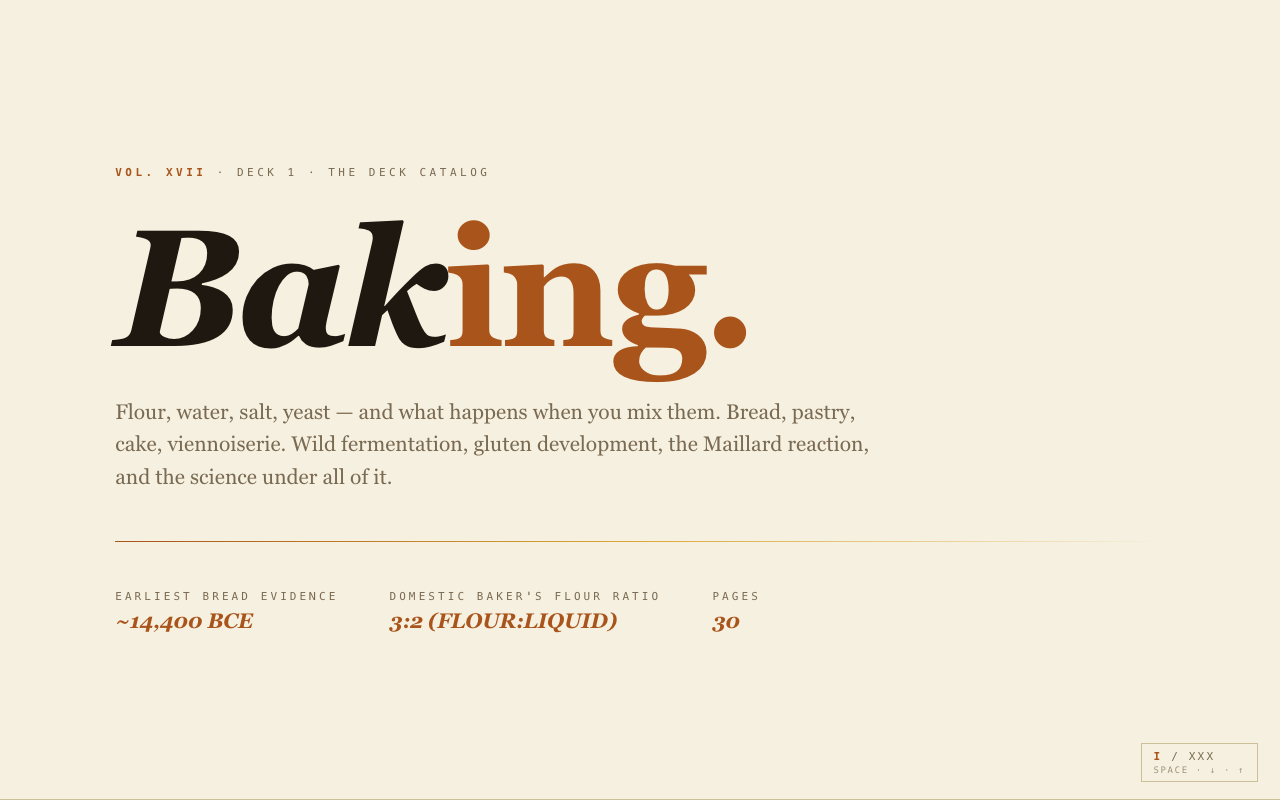
Baking
Baking is the most chemical kind of cooking. The oven is closed, the dough is alive, and what comes out depends on choices made hours before — choices about hydration, fermentation, kneading, shaping, scoring, temperature.
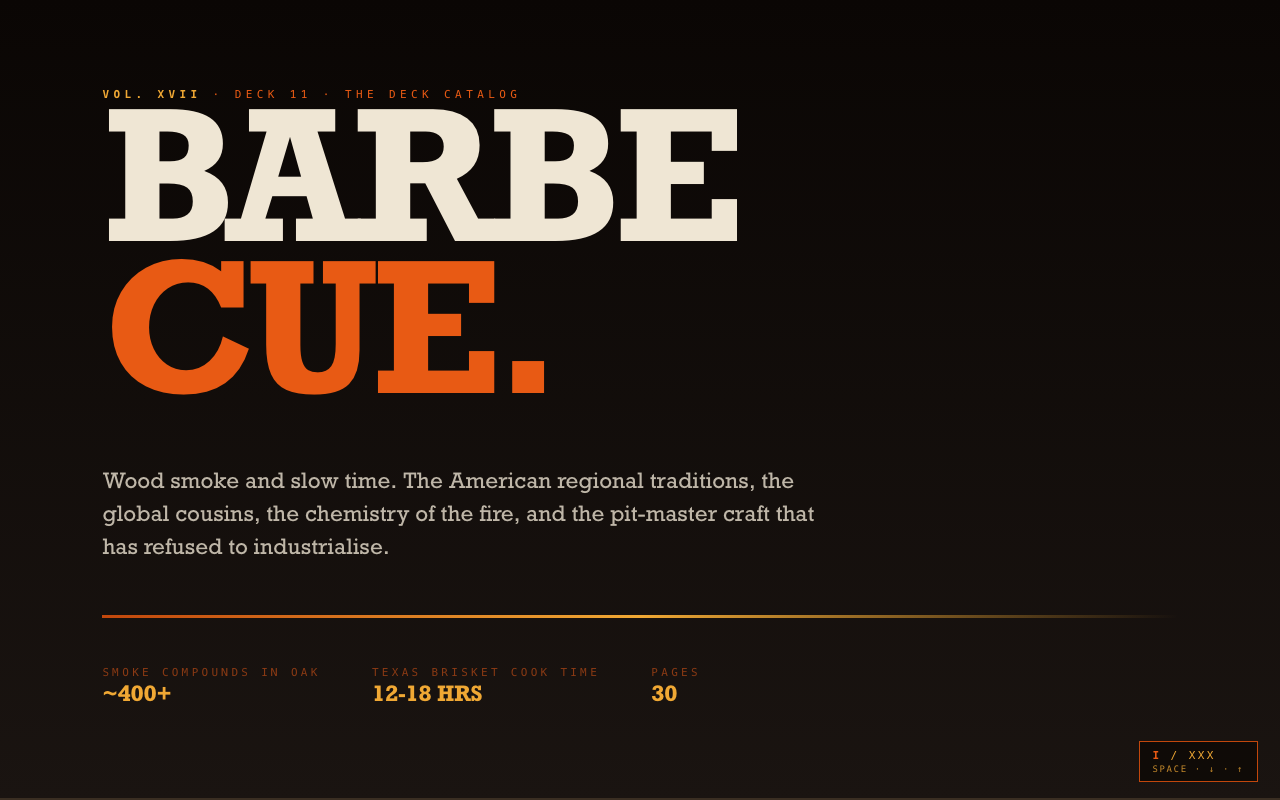
Barbecue
Barbecue is the slowest cooking. It is also the most American — not because the technique is American (it isn't) but because the four big regional traditions resolved themselves on this continent, in the last 180 years, into something specific and contested.
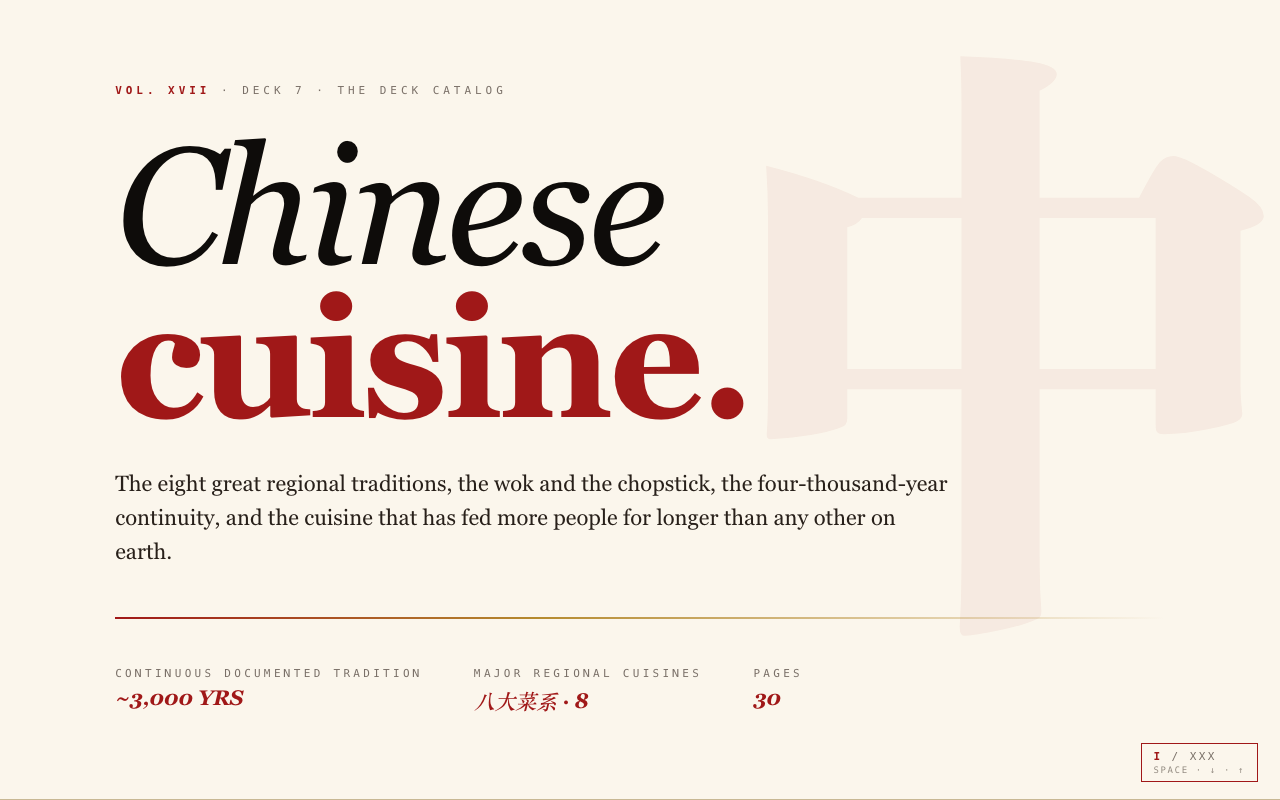
Chinese Cuisine
Chinese cooking is the longest continuous food tradition on earth. It has fed the largest population, generated the most regional variation, and produced the most-imitated cooking technique (the wok-fried stir-fry) of any kitchen in human history.
Coffee Culture
From Ancient Ethiopian Highlands to Your Morning Cup
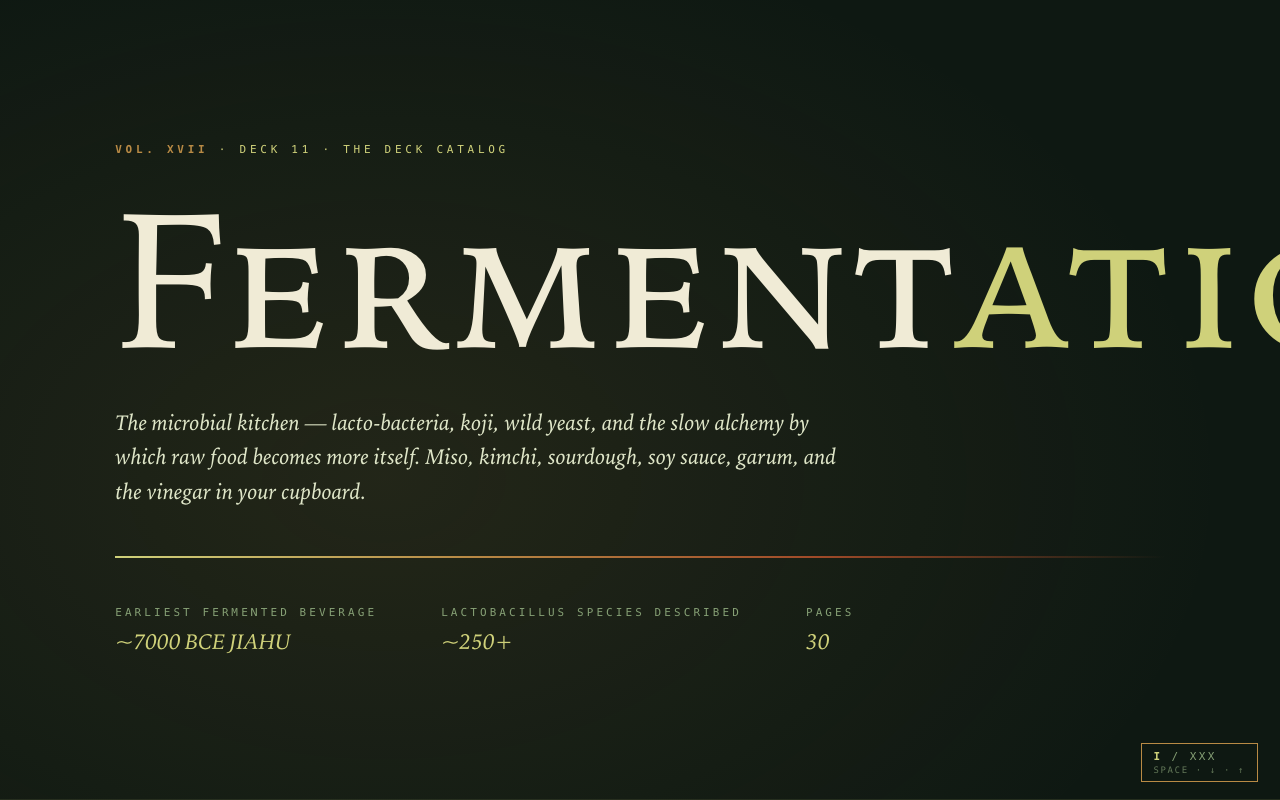
Fermentation
Fermentation is what humans do with microbes when both parties win. Yeast eats sugar; we get bread and beer. Lactic acid bacteria eat sugar; we get cheese and kimchi. Aspergillus eats rice; we get sake and soy sauce.
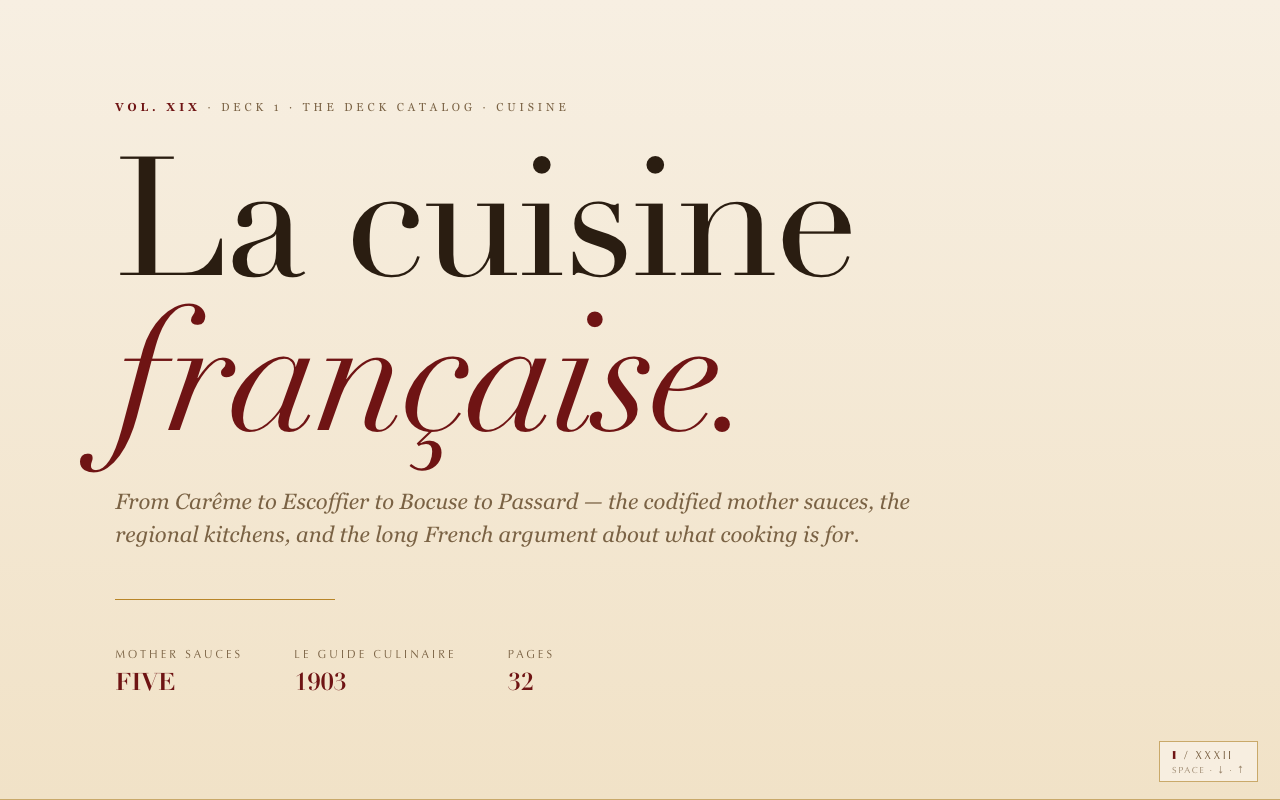
French Cuisine
For roughly three centuries — from Louis XIV's Versailles kitchens to the nouvelle revolt of the 1970s — France set the terms by which serious cooking was judged. The vocabulary, the technique, the brigade, the Michelin star: the institutions of fine dining are French inventions.
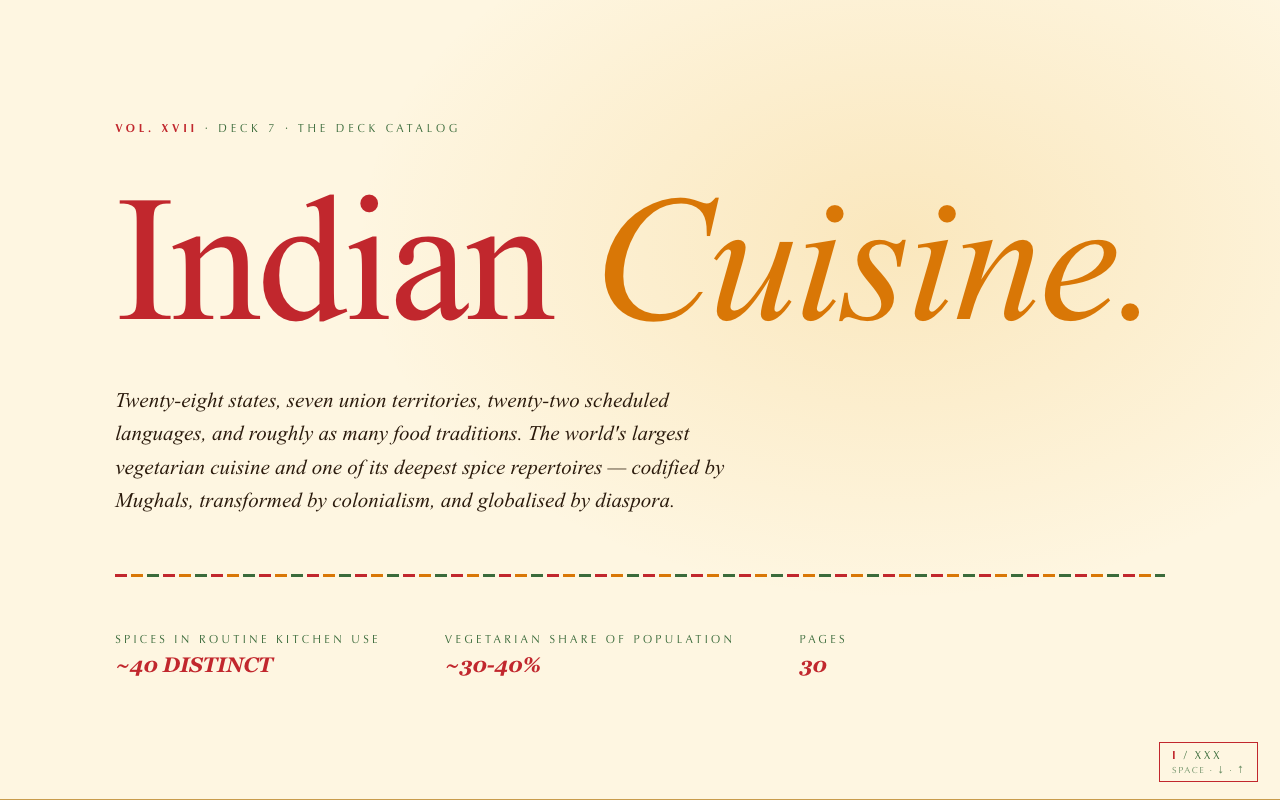
Indian Cuisine
"What is Indian food?" is the wrong question. India is more linguistically and agriculturally diverse than Europe; its food is no more a single cuisine than European food is.
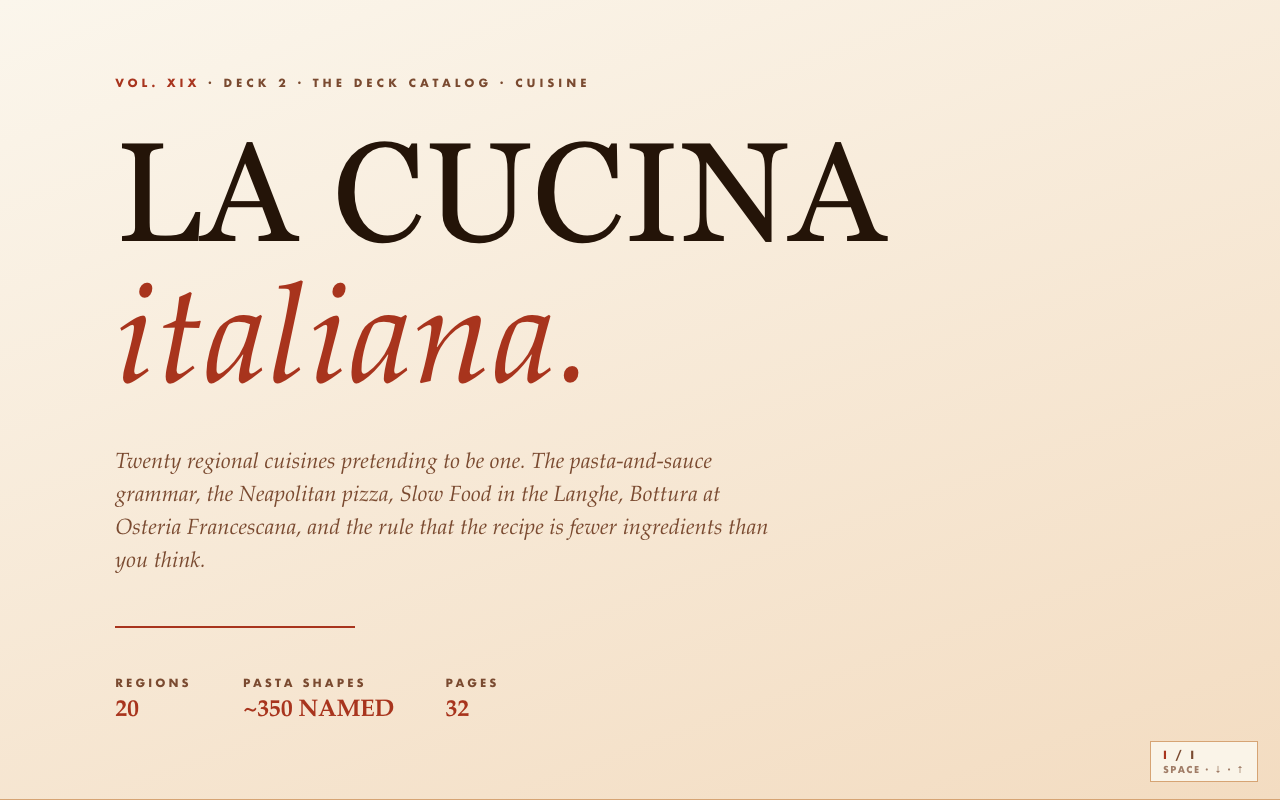
Italian Cuisine
There is no Italian cuisine. There are twenty regional cuisines bound together by a confederation younger than the United States — the Risorgimento finished in 1871 — that share a few staples, a fanatical attachment to ingredient quality, and the conviction that the recipe should be shorter than it is.
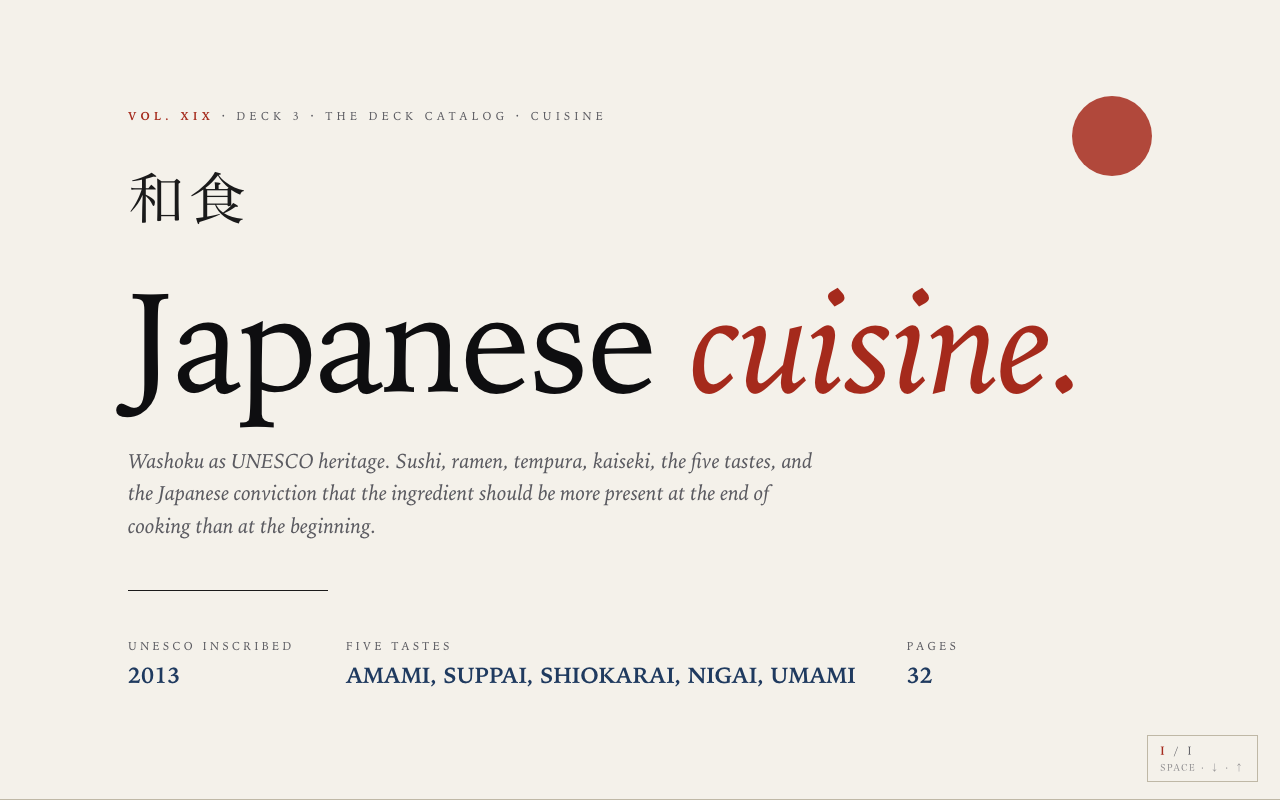
Japanese Cuisine
UNESCO inscribed washoku — "the dietary cultures of the Japanese, notably for the celebration of the New Year" — on its intangible-heritage list in 2013. The category is broader than the foreign image of Japanese food. Sushi and ramen are the foreign ambassadors; washoku is the home meal of rice, soup, three side dishes, pickle.
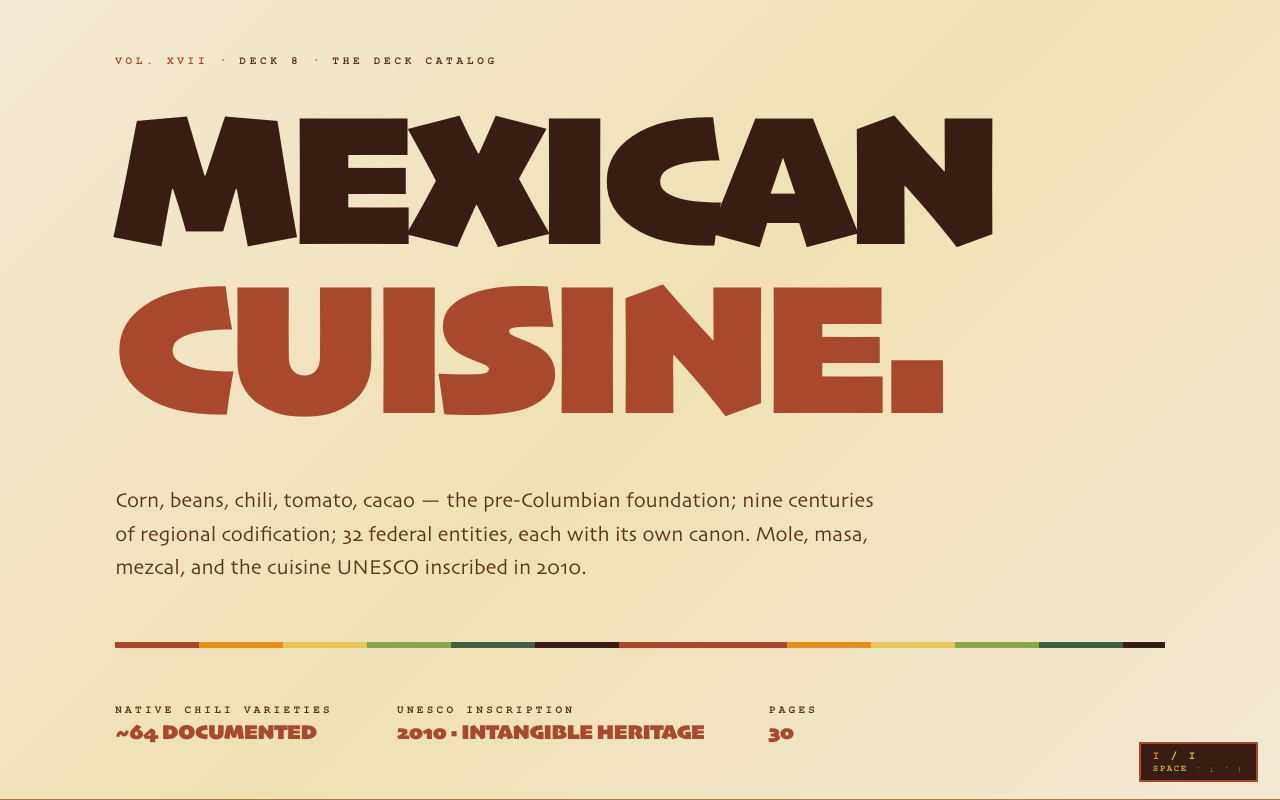
Mexican Cuisine
Outside Mexico, Mexican food usually means Tex-Mex. Inside Mexico, the cuisine is one of the world's most regionally complex — UNESCO inscribed it as Intangible Cultural Heritage of Humanity in 2010, the first cuisine ever so recognised.
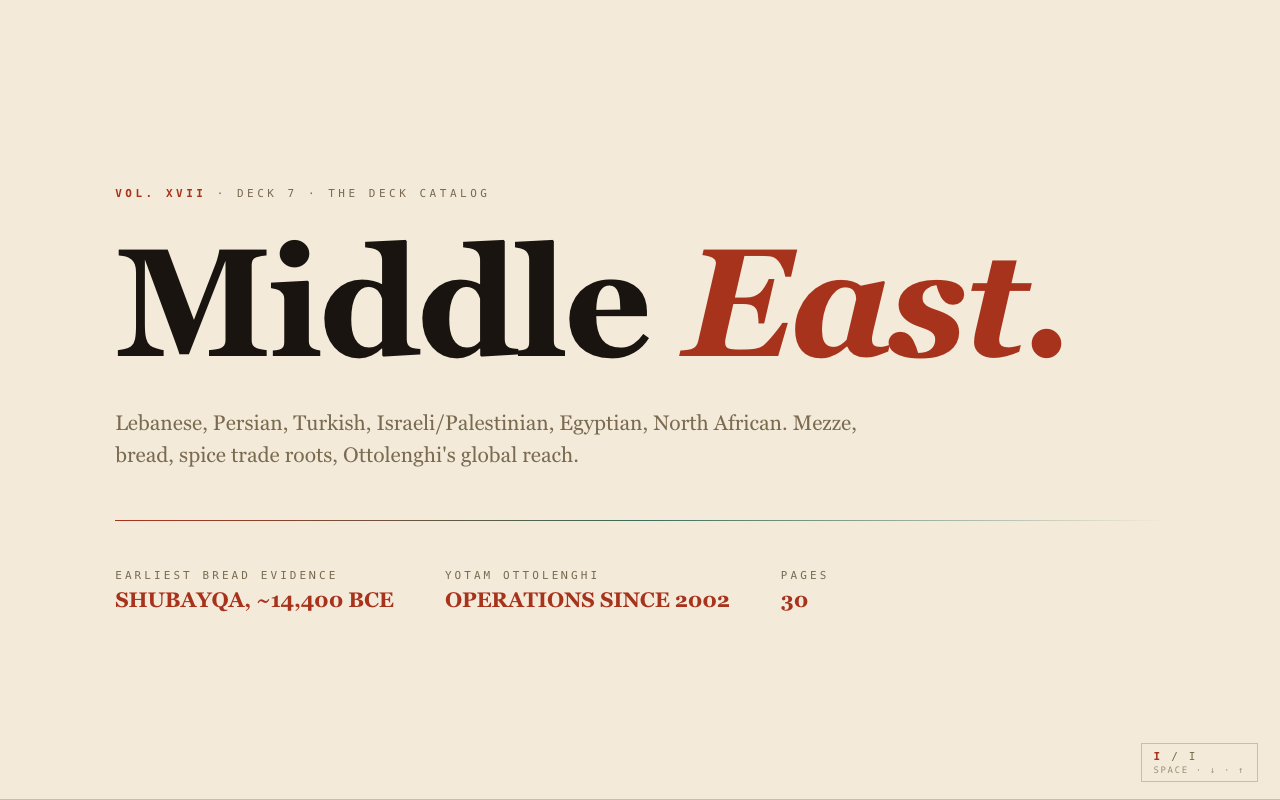
ME Cuisine
Middle Eastern cuisine is a constellation of regional traditions sharing common roots in the eastern Mediterranean and Levantine spice-and-bread tradition. Lebanese, Persian, Turkish, Palestinian, Egyptian, and North African cuisines have historical interconnections without being identical.
Plant-Based Cooking
The Art and Science of Cooking Without Animals
Wine and Spirits
A Journey Through