Art Slides
A curated collection of interactive HTML presentation decks, slide outlines, and topics covering Art.
Popular presentations about Art
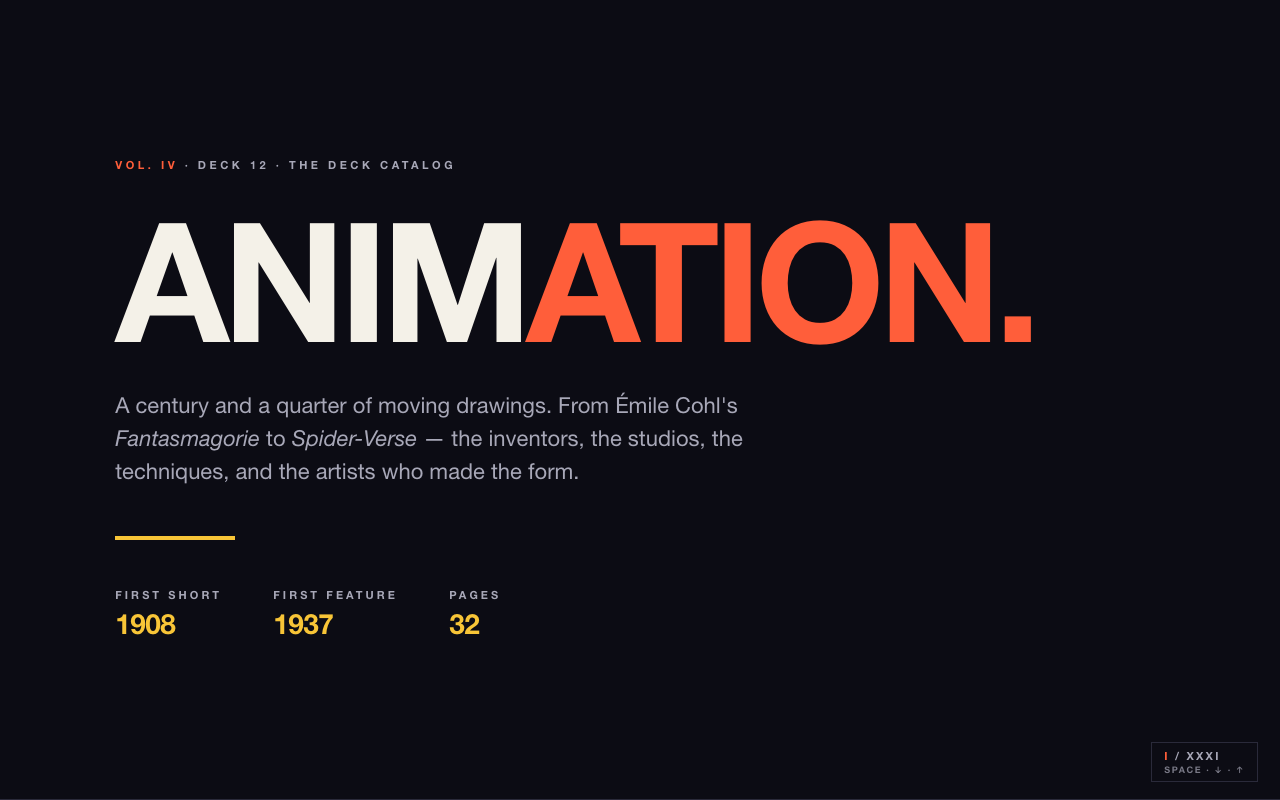
Animation
A series of slightly different still images shown in rapid sequence, exploiting persistence of vision to produce the illusion of continuous motion.
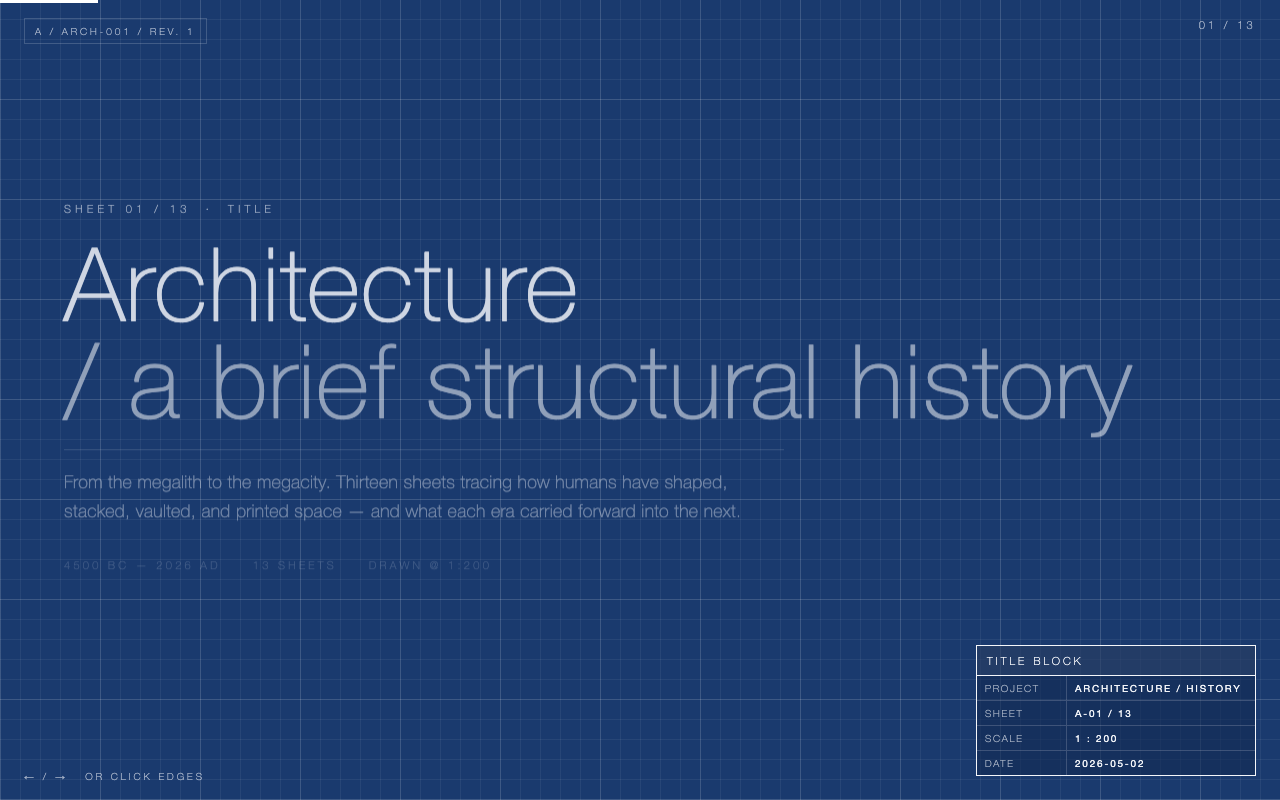
Architecture / a brief structural history
From the megalith to the megacity. Thirteen sheets tracing how humans have shaped, stacked, vaulted, and printed space — and what each era carried forward into the next.
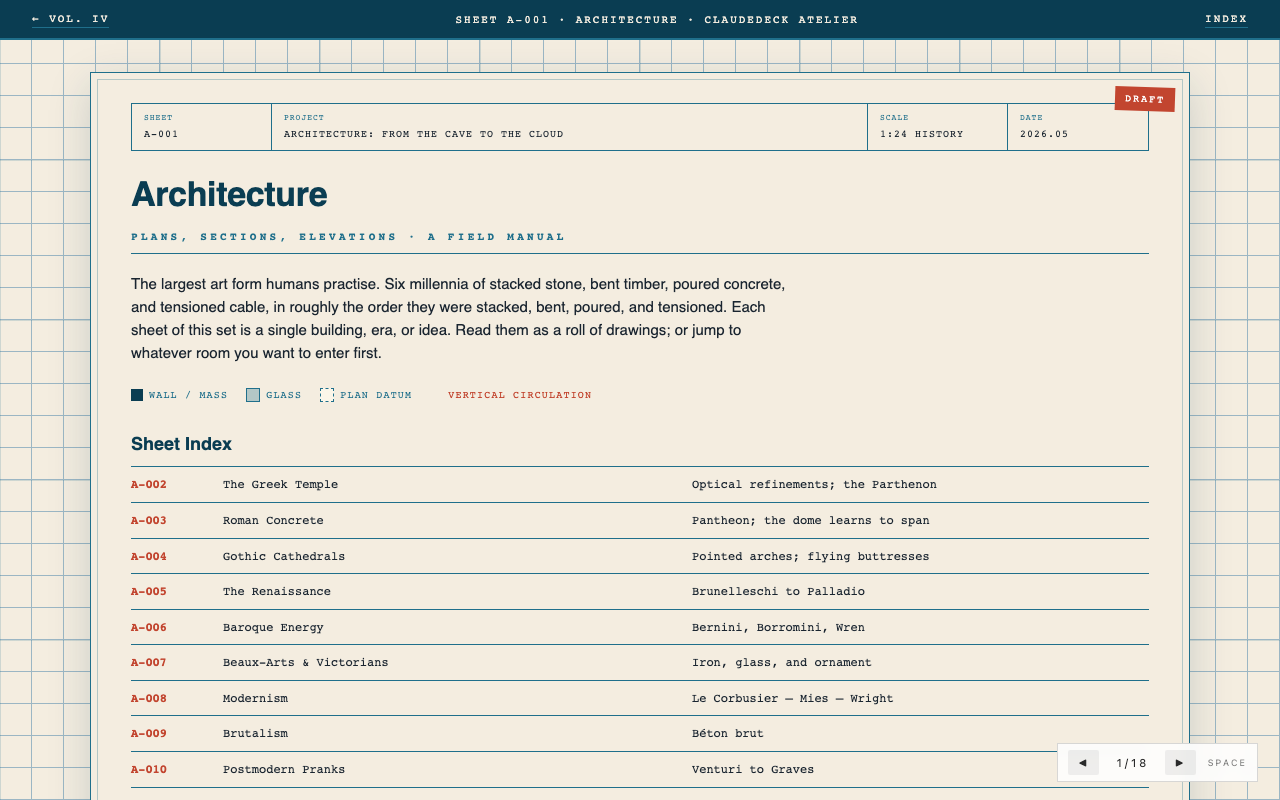
Architecture
From megalithic standing stones to parametrically generated towers of glass — humanity's most public art form and most essential technology, forged at the intersection of shelter, structure, beauty, and meaning across ten thousand years.
Art Deco Architecture
A Visual Journey Through
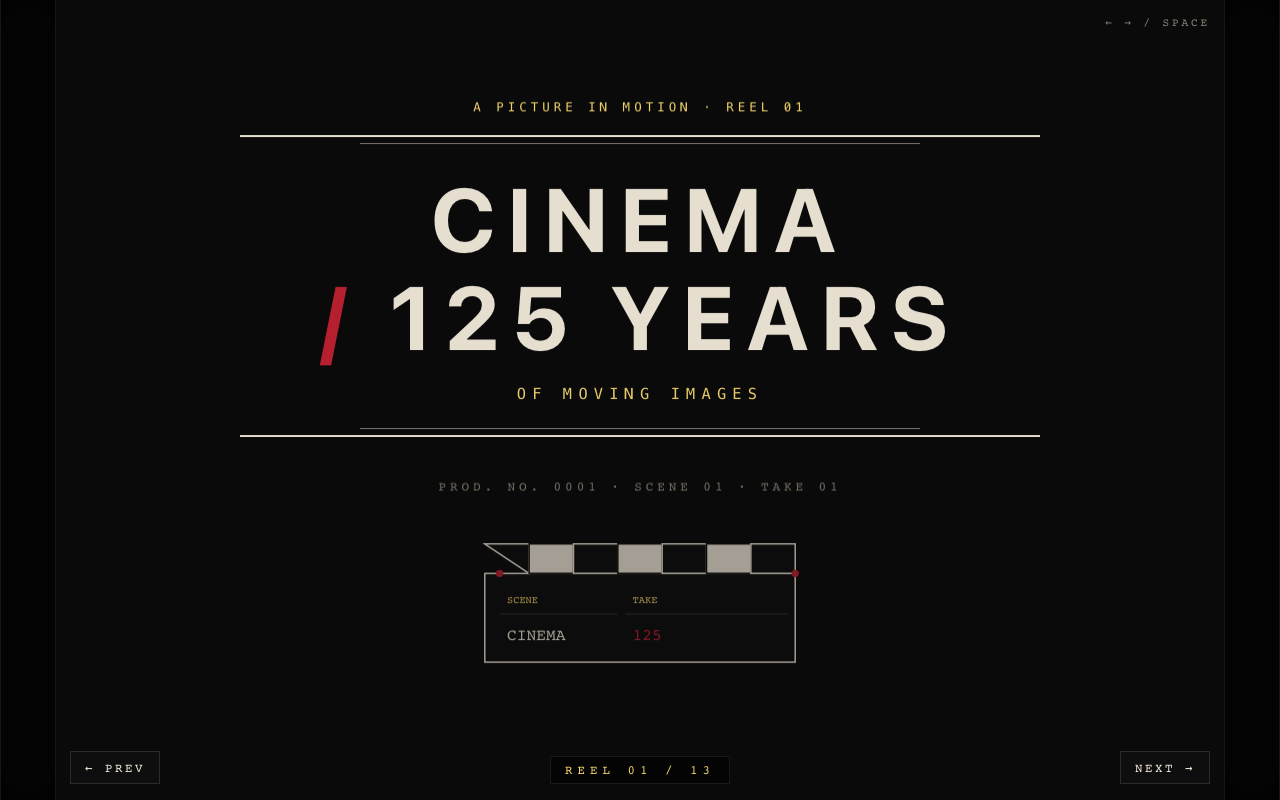
CINEMA — 125 Years of Moving Images
SCENE TAKE CINEMA 125 Reel 02 · 1895 The First Audiences Lumière, Paris December 28, 1895. The Lumière brothers project ten short films at the Salon Indien du Grand Café. L'Arrivée d'un train en gare de La Ciotat reportedly sends viewers diving from their seats. Cinema is born as a public, communal event — a shared startle.
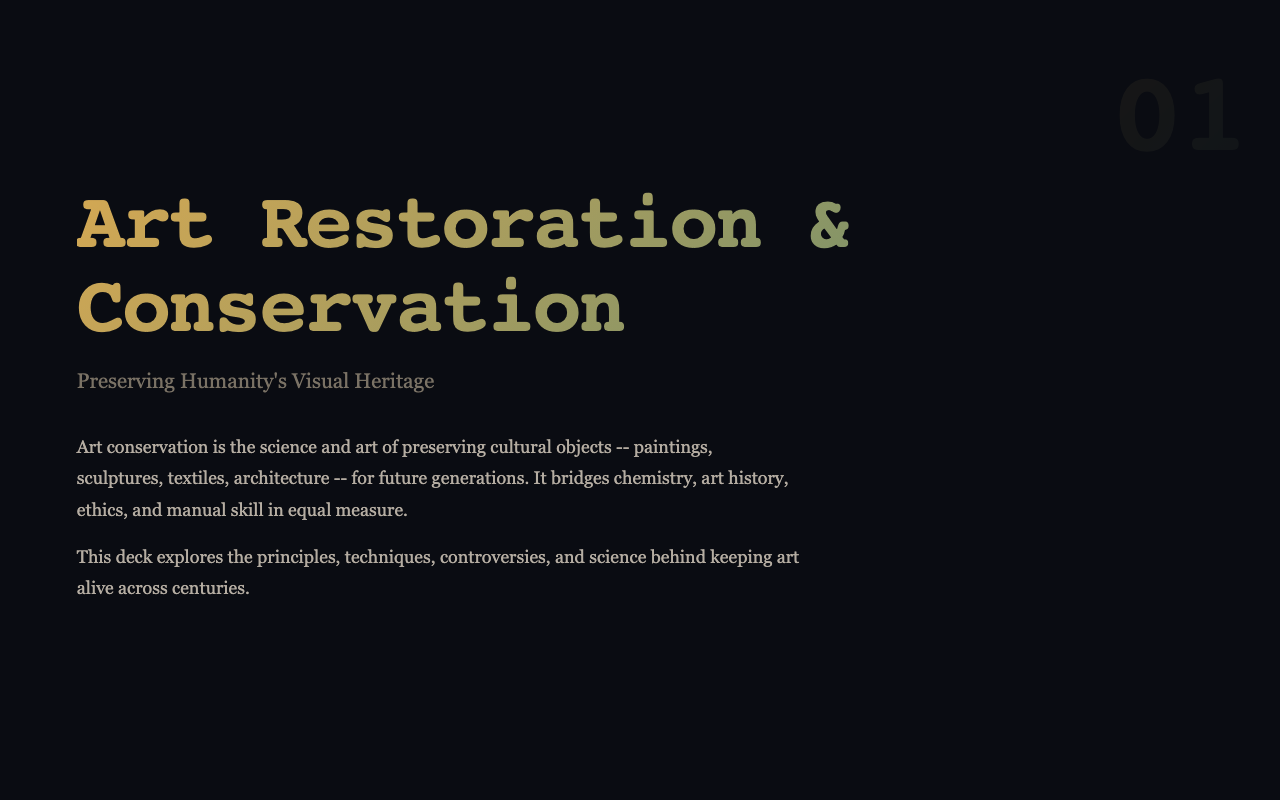
Art Restoration and Conservation
Preserving Humanity's Visual Heritage
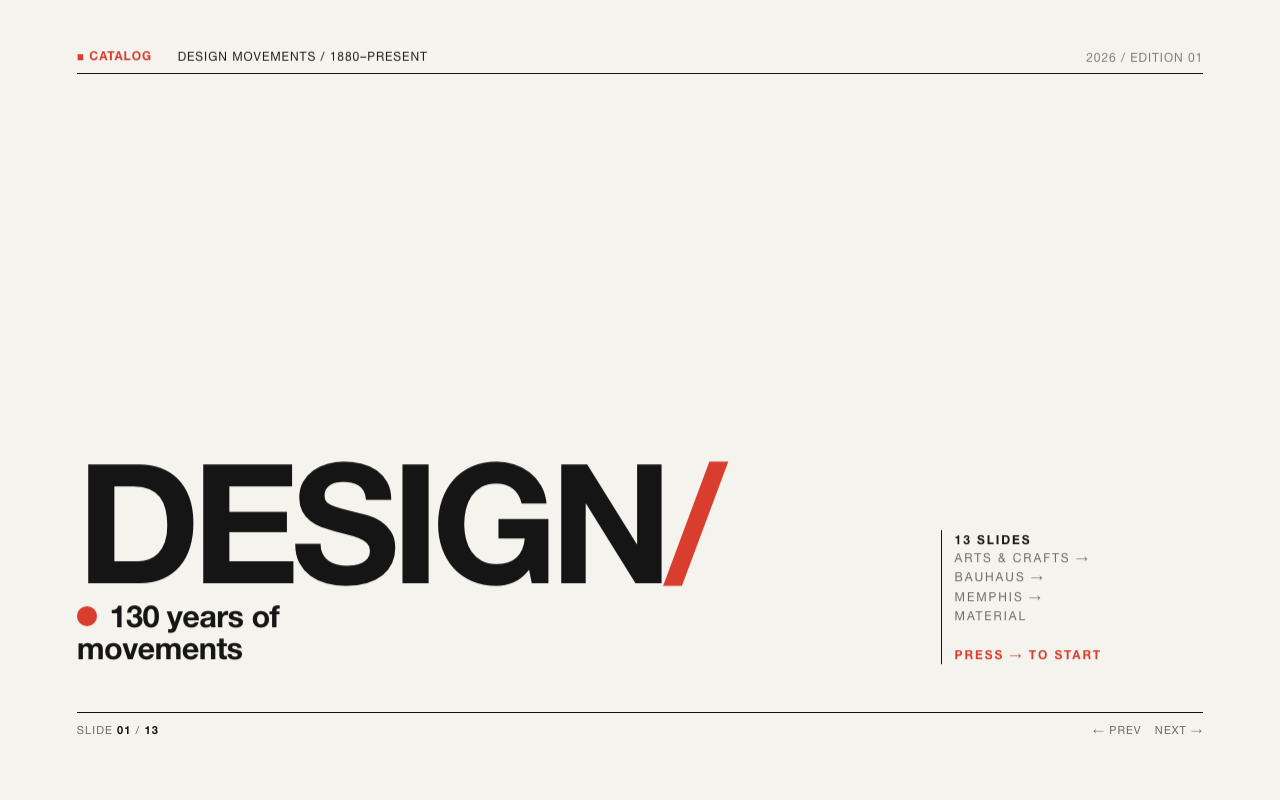
Design / 130 Years of Movements
A 19th–century revolt against industrial ugliness. William Morris and John Ruskin held that beauty lived in the maker’s hand — in honest materials, visible joinery, and patterns drawn from nature.
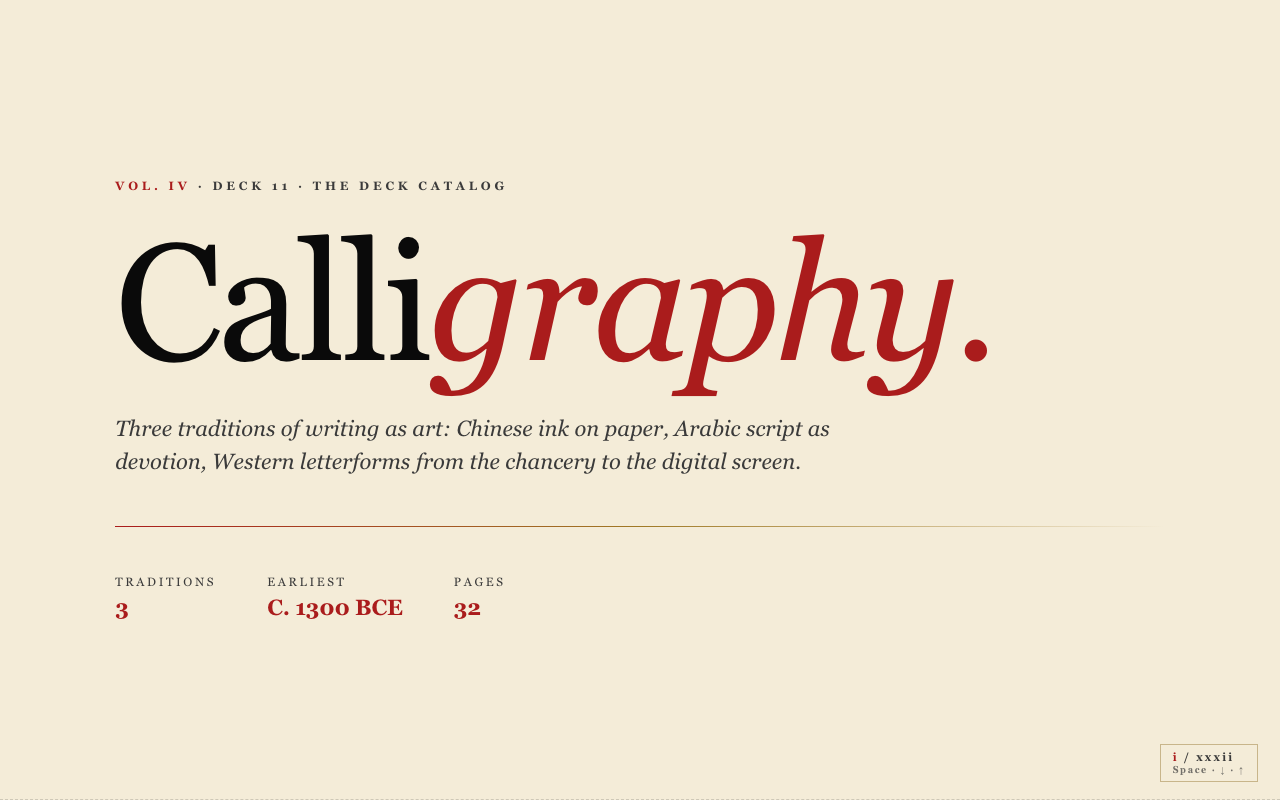
Calligraphy
Calligraphy is the slowest visual art and the most patient. A single Chinese character can take a master sixty years to master. A single Quranic verse can take a year to compose.
Impressionism — A Gallery Deck
Painting light, 1872–1886
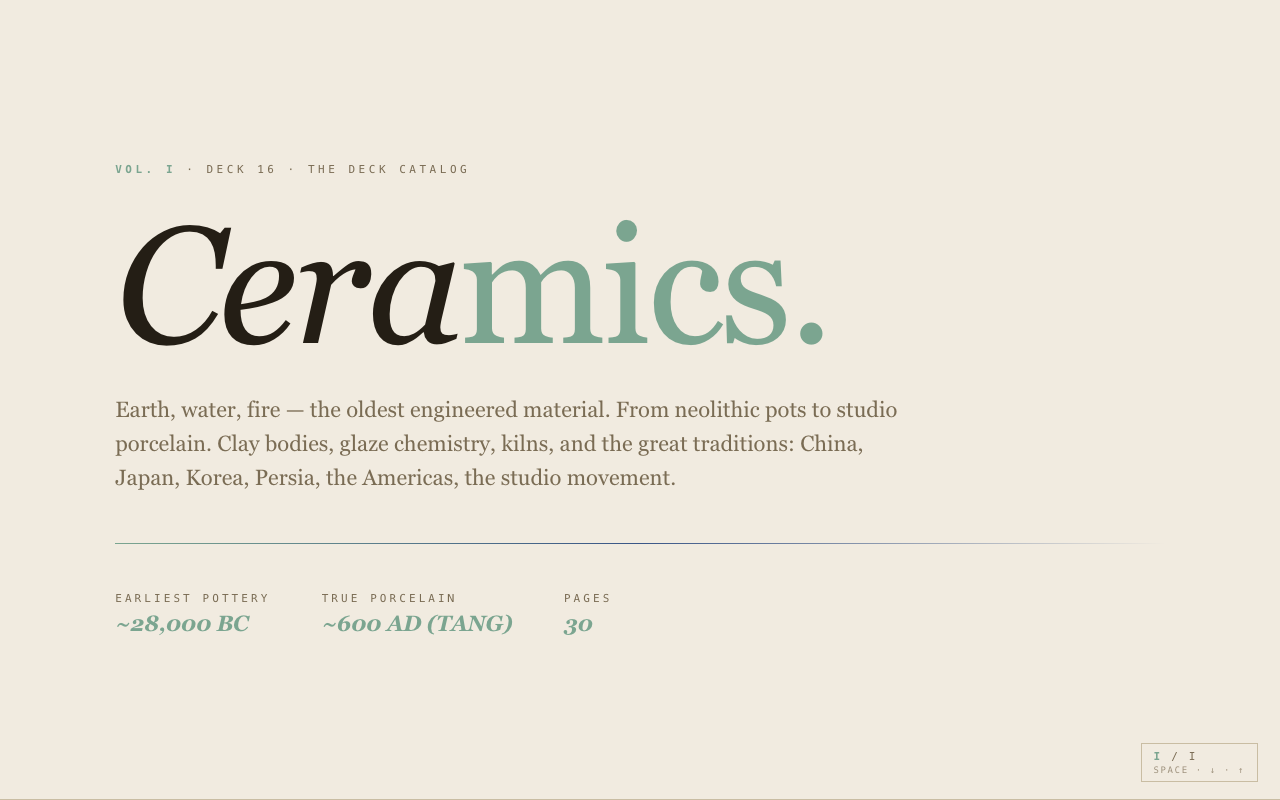
Ceramics
Before bronze, before iron, before glass — fired clay. Ceramics is the oldest engineered material that survives in archaeological volume, and possibly the oldest manufactured material full stop.
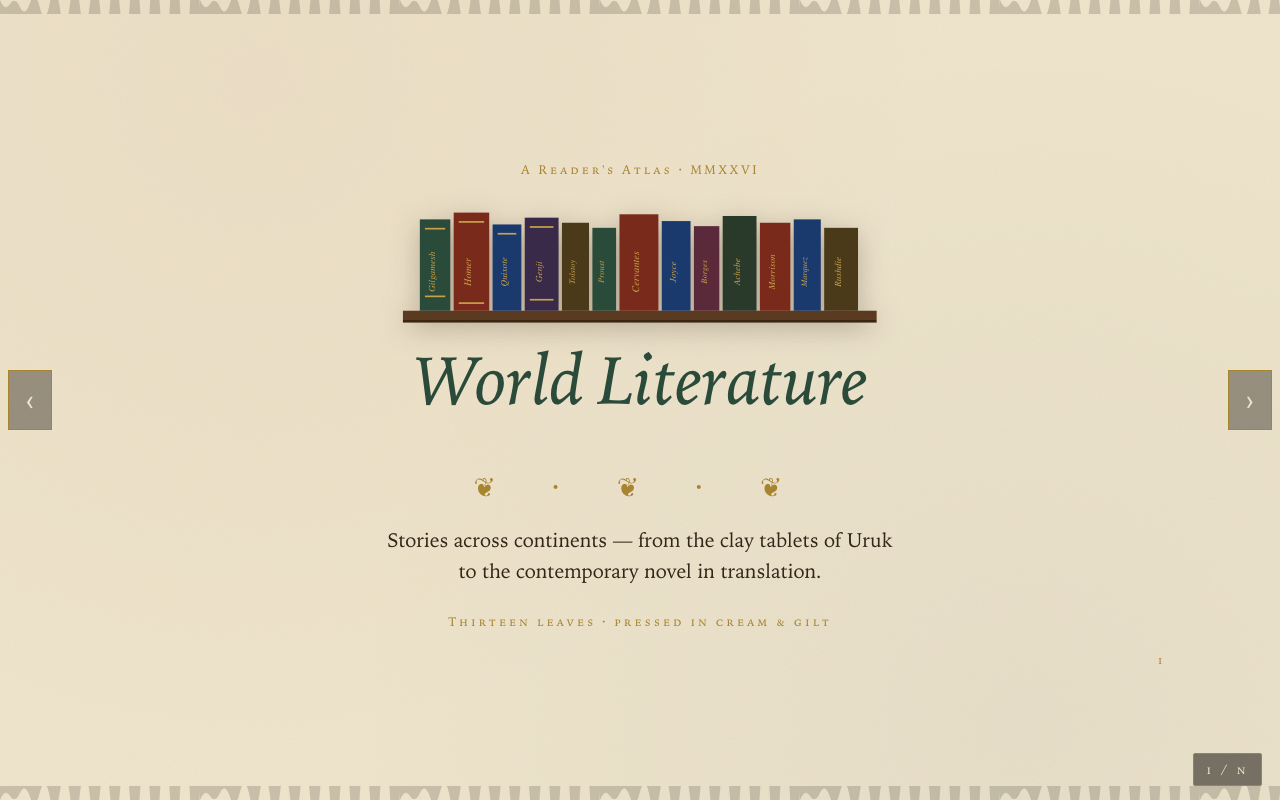
World Literature — Stories Across Continents
Stories across continents — from the clay tablets of Uruk to the contemporary novel in translation.
Cinema
Born in 1895 from a lightbulb and a spinning reel, cinema became the defining art form of the 20th century — the medium through which humanity dreamed collectively, processed its fears, and reimagined itself across every culture on earth.
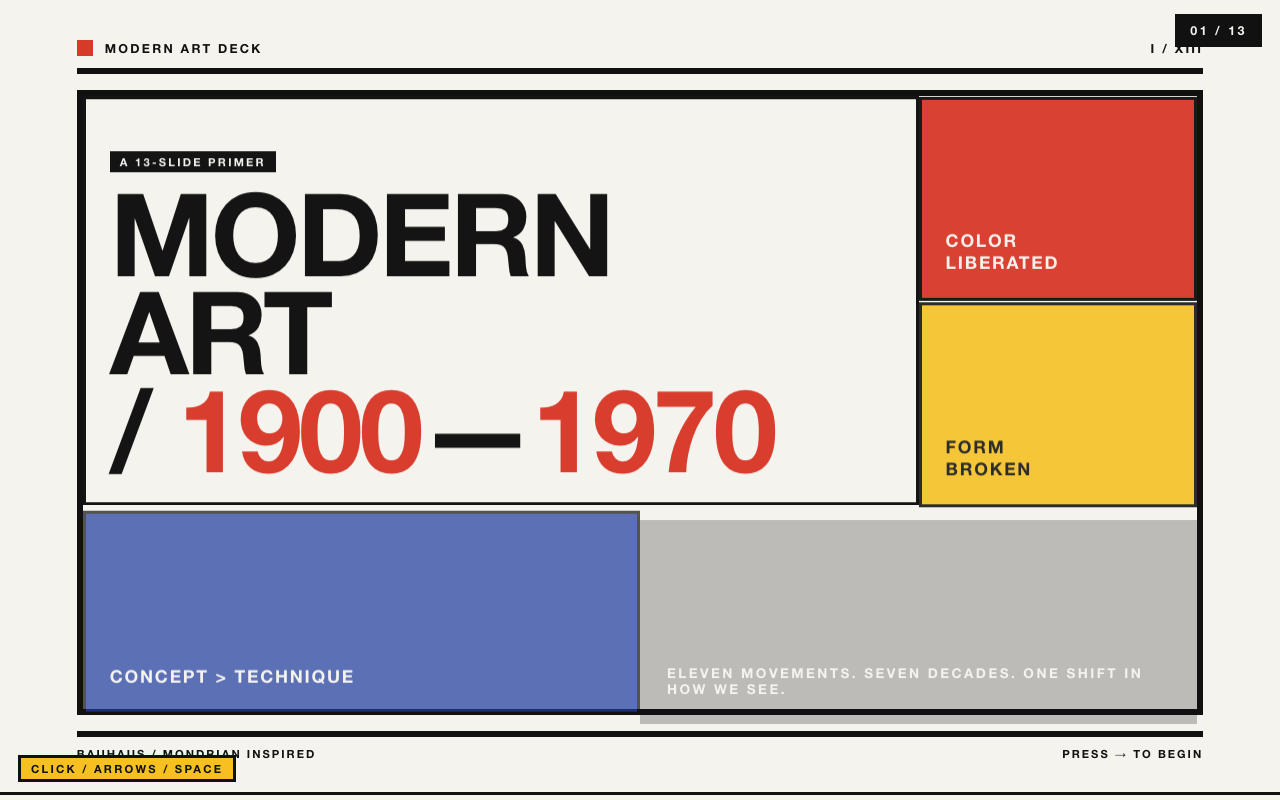
Modern Art / 1900-1970
Henri Matisse, André Derain, Maurice de Vlaminck. They paint a face green, a sky pink, a tree red — not to describe the world, but to express it.
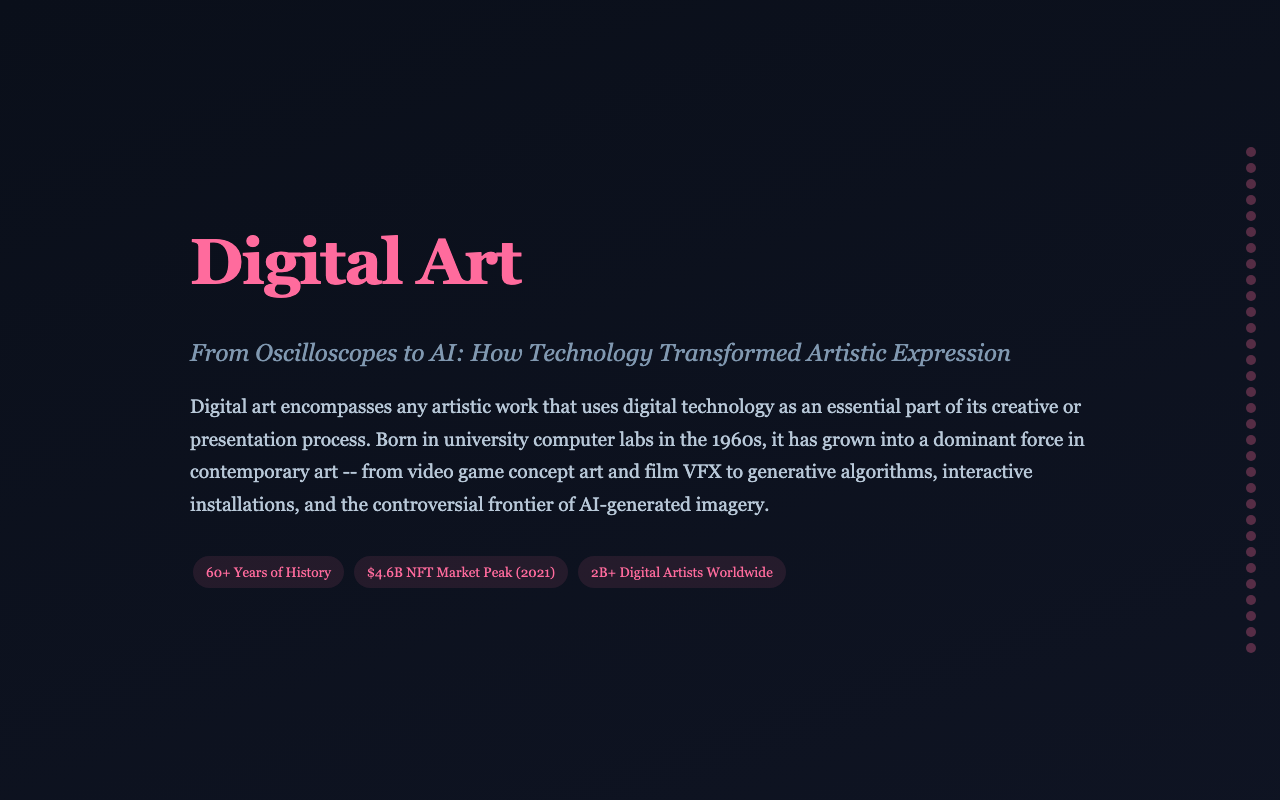
Digital Art
From Oscilloscopes to AI: How Technology Transformed Artistic Expression
MUSIC — A Brief History (Concert Program)
❦ ❦ ❦ Conducted in thirteen movements — use → or click
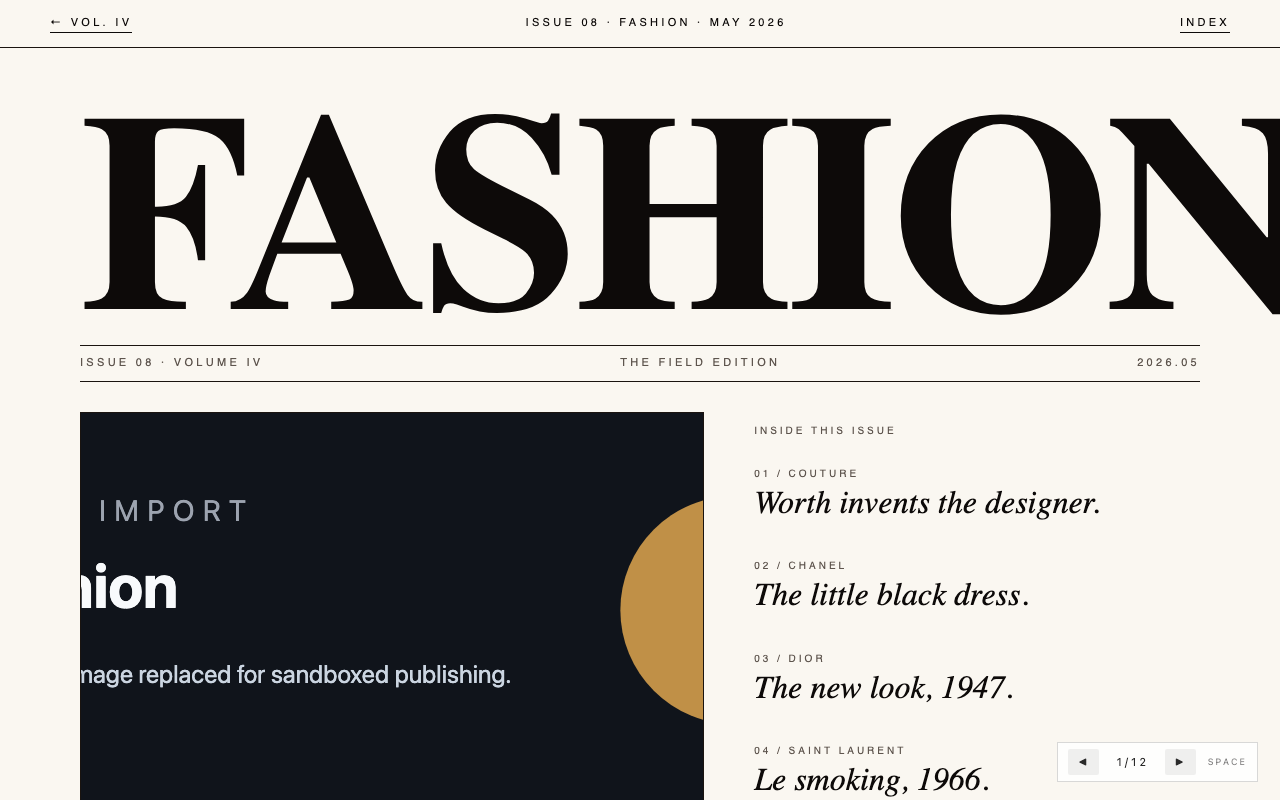
Fashion
Fashion is simultaneously the most intimate and the most public of art forms — worn on the body, read by strangers, and shaped by forces ranging from royal decree to street protest, from industrial capitalism to individual genius.
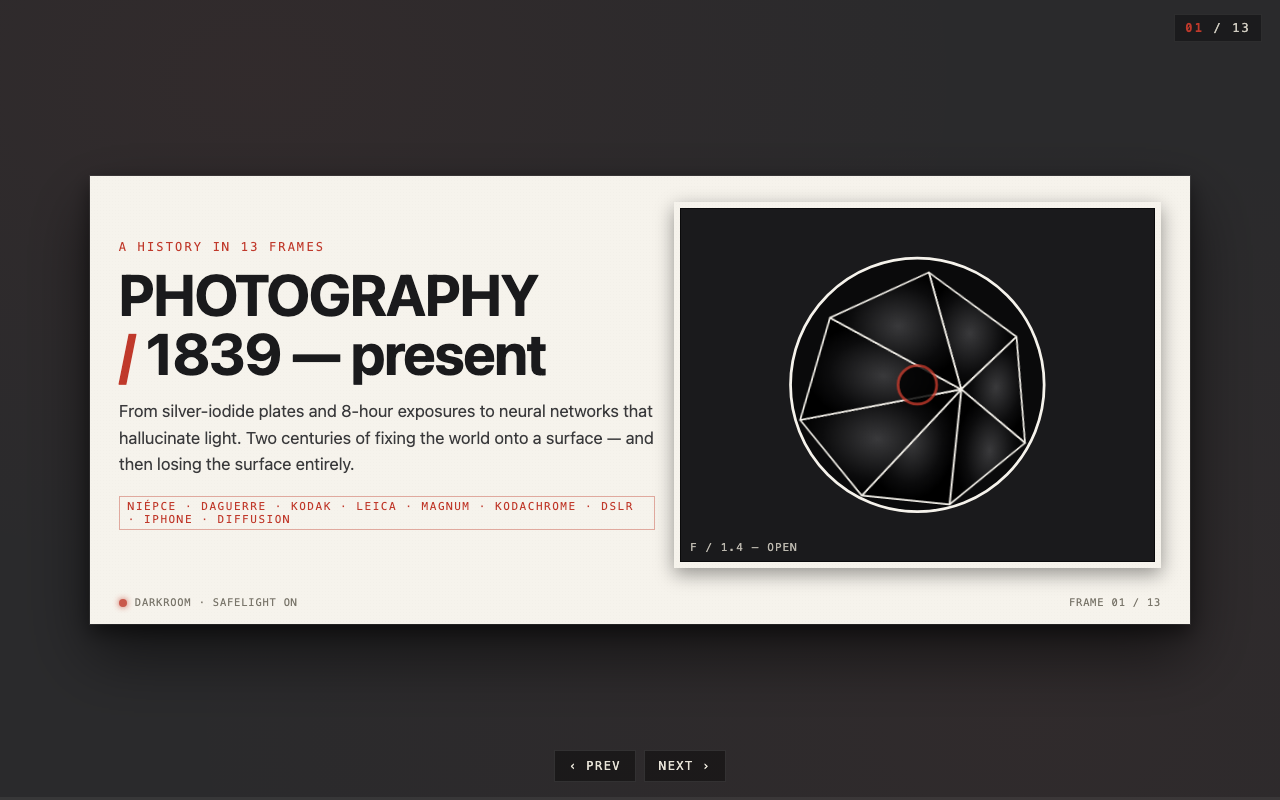
PHOTOGRAPHY / 1839 — present
From silver-iodide plates and 8-hour exposures to neural networks that hallucinate light. Two centuries of fixing the world onto a surface — and then losing the surface entirely.
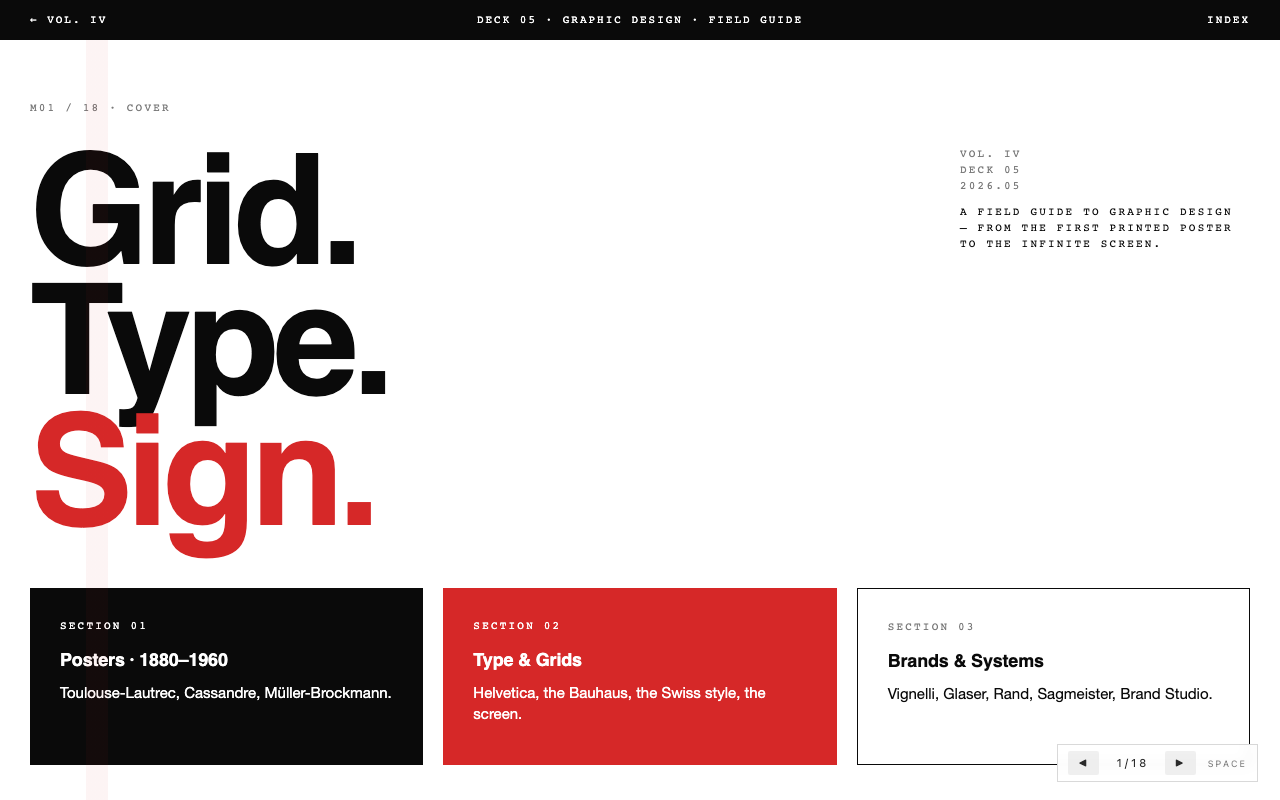
Graphic Design
From Gutenberg's press to AI image generators — the art of making ideas visible has shaped every era of human communication and culture.
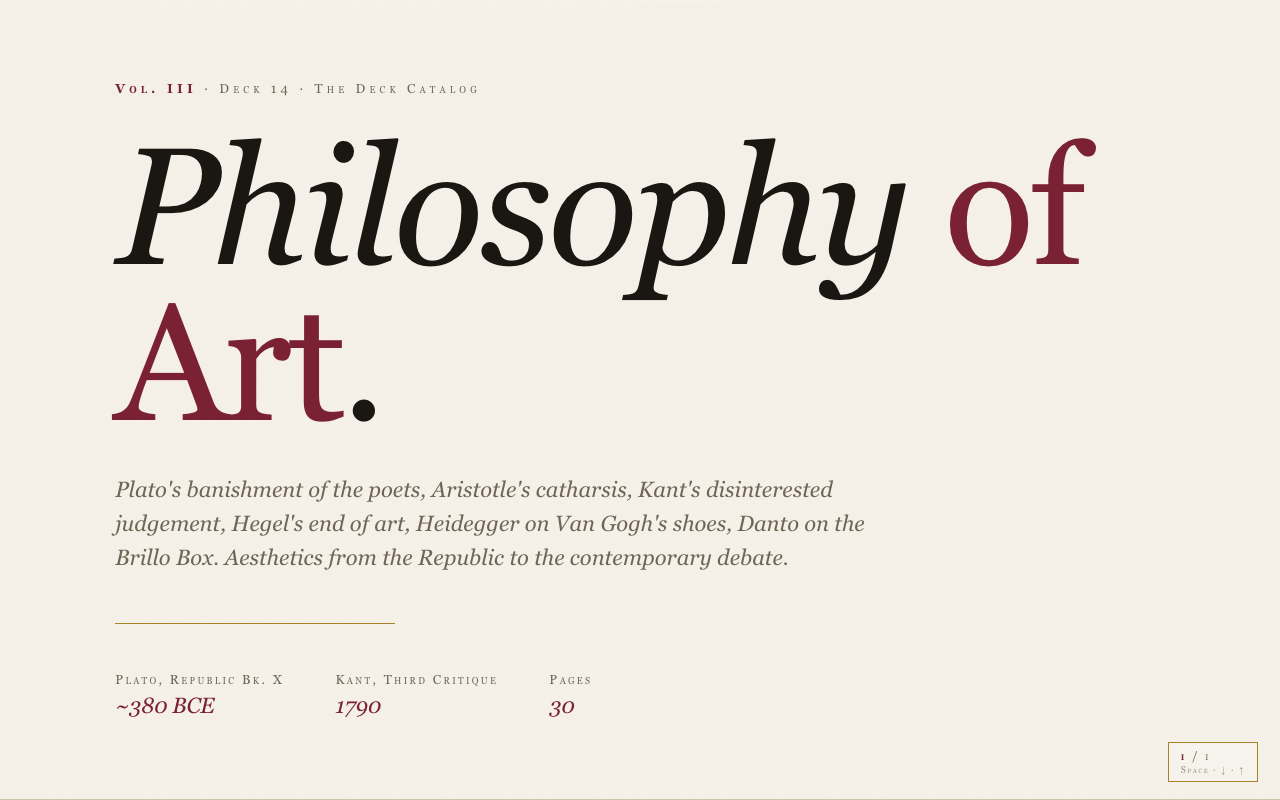
Philosophy of Art
The philosophy of art is the philosophical investigation of what art is, what makes something beautiful, what aesthetic experience consists in, and why any of it matters. The discipline is as old as Plato's Republic and as current as last week's debate about whether AI-generated images are art.
Renaissance Art — A Frescoed Gallery Deck
Florence rediscovers seeing — the eye, the line, the human form.
Impressionism
The revolutionary movement that shattered academic painting conventions and taught the world to see light, color, and the fleeting beauty of modern life.
STREET ART // Walls as Canvases
"); background-size:cover;background-repeat:no-repeat;mix-blend-mode:multiply;opacity:.5; } h1,h2,h3{text-transform:uppercase;line-height:.92;font-weight:400;} h1{font-size:clamp(3rem,9.5vw,9rem);} h2{font-size:clamp(2.2rem,5.5vw,5rem);} h3{font-size:clamp(1.4rem,2.6vw,2.4rem);} p,li{font-family:"Helvetica Neue",Arial,sans-serif;font-size:clamp(1rem,1.6vw,1.35rem);line-height:1.45;letter-spacing:0;}...
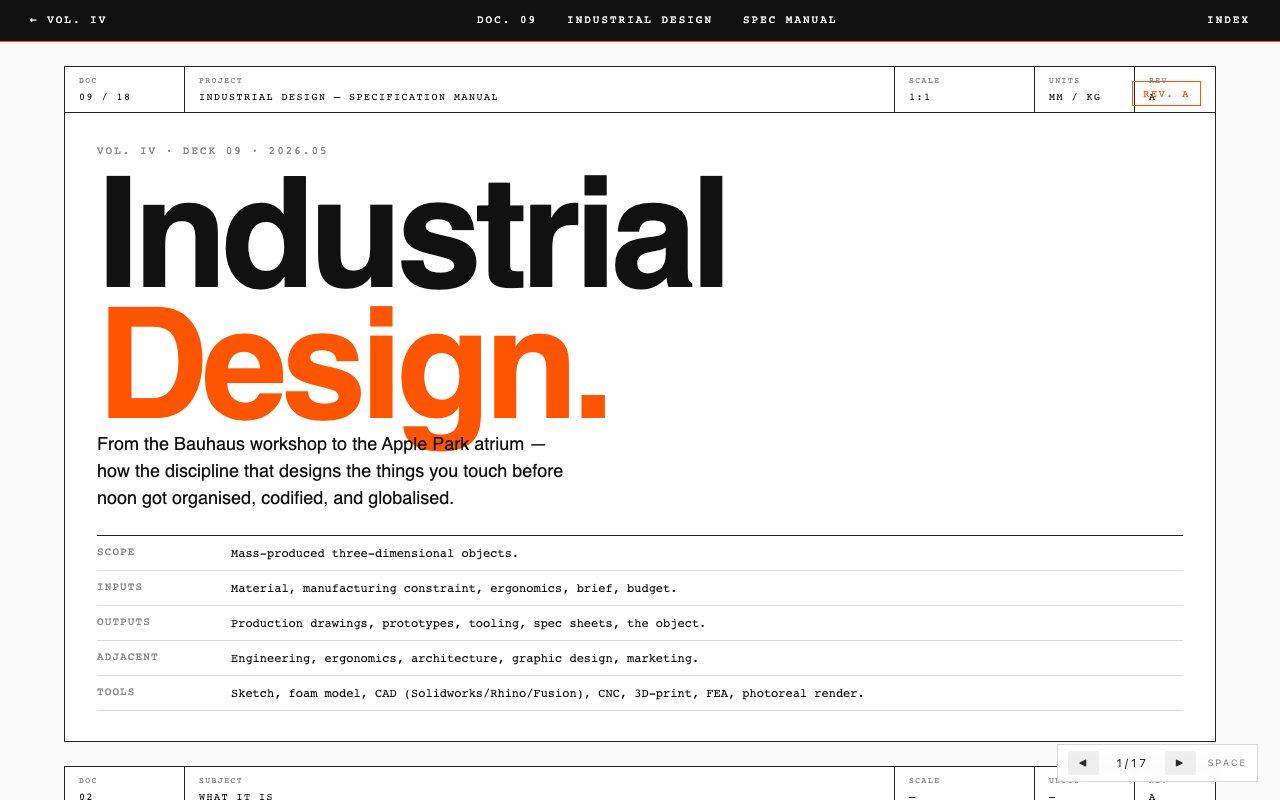
Industrial Design
The discipline that shapes every manufactured object in your life — from the chair you sit on to the phone in your pocket — balancing beauty, function, ergonomics, and manufacturing reality.
Modern Art Movements
From Impressionism to AI-Generated Art — A Century and a Half of Creative Revolution
Modernism
A seismic cultural shift across art, literature, architecture, and music — from the 1880s to the 1960s — that rejected tradition, embraced experimentation, and declared the present moment new territory to be mapped.
Photography
From Greek phos (light) and graphe (writing) — photography is the art of writing with light, fixing a moment of the visible world that would otherwise vanish forever. In 190 years it has transformed how humanity remembers, communicates, mourns, and understands itself.
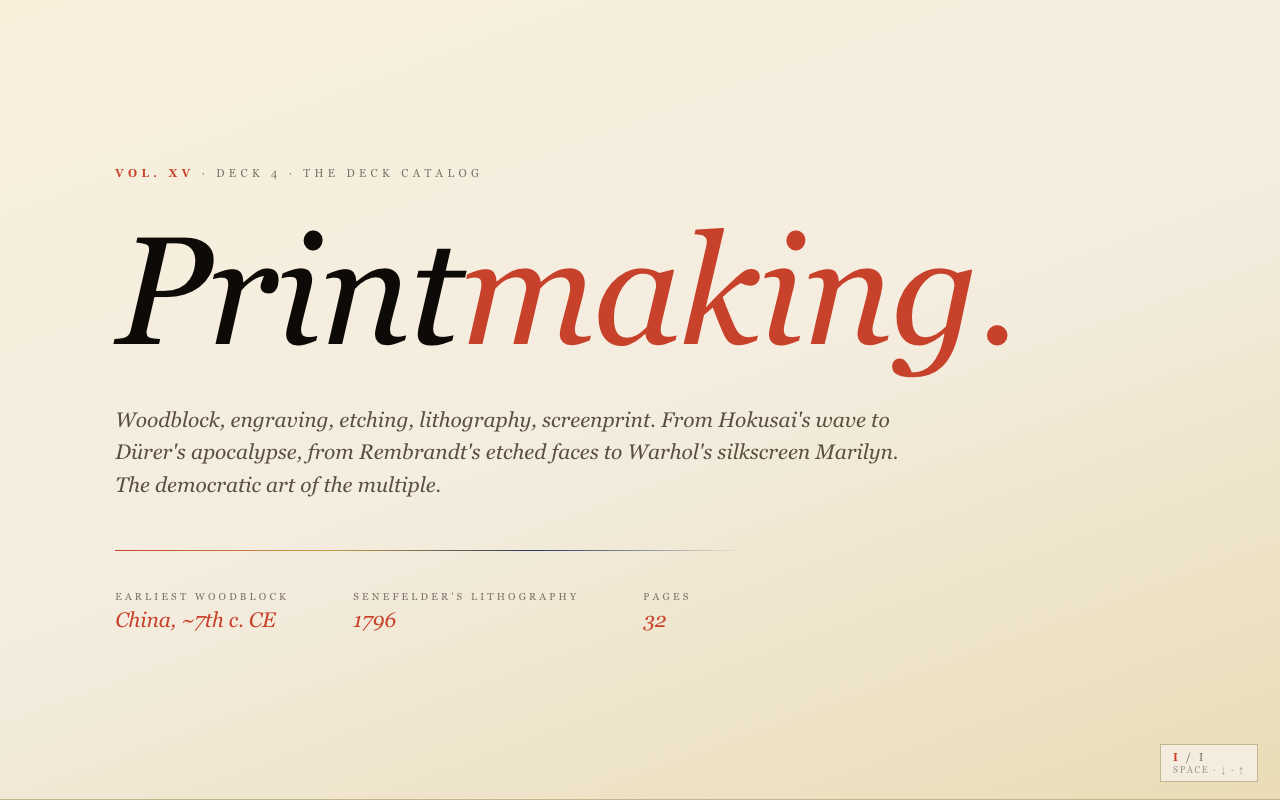
Printmaking
Printmaking is the art that produces multiples. A drawing is unique; a painting is unique; a print is one of an edition of dozens or hundreds. The artist makes a matrix — a carved block, an incised plate, a stone with greasy drawing, a stretched fine-mesh screen — and the matrix is then printed onto paper. The original is not the finished print; the original is the matrix, which can produce many prints over time...
Renaissance Art
The rebirth of classical ideals, the discovery of perspective, and the flowering of human genius across Italy and Europe — 1300 to 1600.
Sculpture: The Art of Three Dimensions
The art of shaping matter into meaning — from ancient stone to living light
Street Art
How unauthorized marks on public walls became one of the most contested, celebrated, and commercially valuable art forms of the 21st century.
Surrealism
Beyond Reality: Art, Revolution, and the Liberation of the Unconscious Mind
Textile Arts
Threads of Civilization: 30,000 Years of Fabric, Fiber, and Form
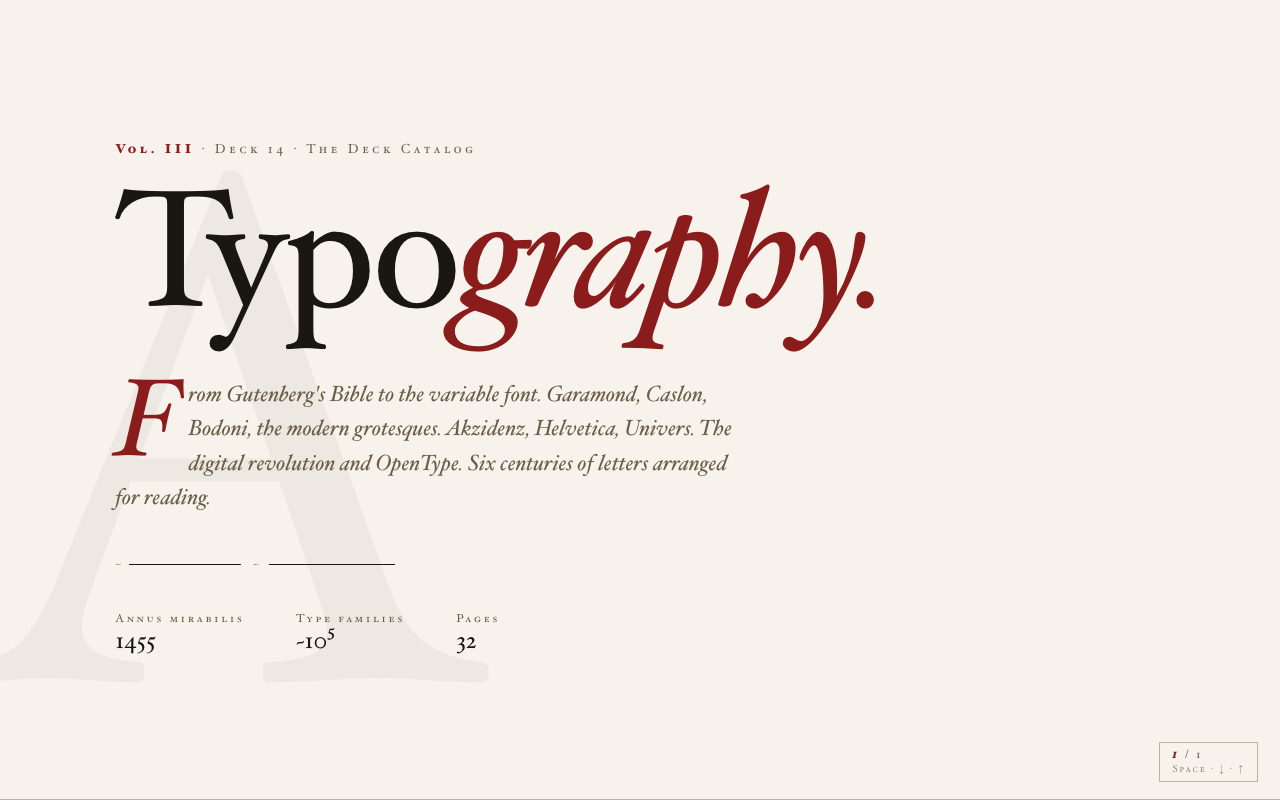
Typography
Typography is the craft of arranging type for legibility, readability, and effect. It is invisible when done well — the reader sees the words, not the letters. Six centuries of practice have built up an immense, almost ritualised vocabulary of refinements: x-heights and counters, stress and contrast, optical sizes and hinting.